Curation.
Timothy Nouzak’s conversational practice treats curation as a mode of organizing relations: between people, sites and their interconnected materials. Across symposia, festival interventions and research-based happenings, Timothy (co-)develops fluid conversational frameworks that lay process bare, building uopn social situations in which spatial dramaturgy and the agency of the collective body become a focus for dialogue.
Angewandte Performance Lab (APL)
during ANGEWANDTE FESTIVAL 2025
Vienna, June 2025
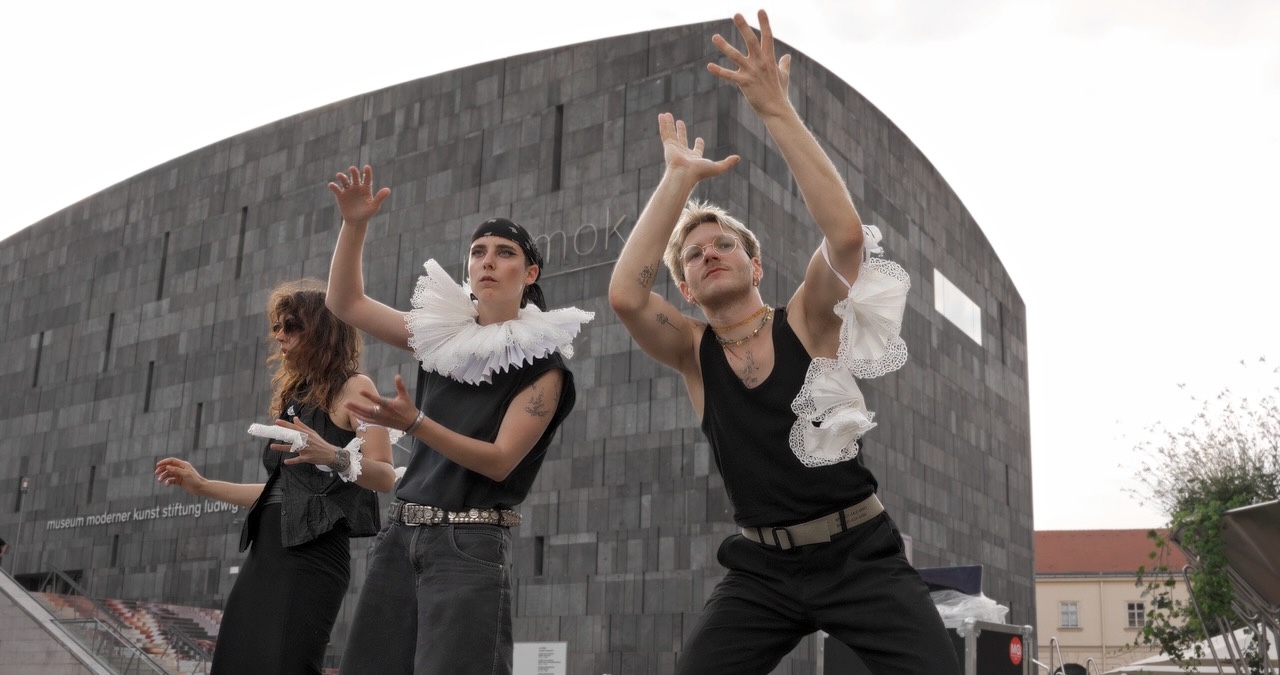
Guided by Peter Kozek and Timothy Nouzak, this year's Students of the Angewandte Performance Laboratory (APL) activated two site-specific interventions: The “Projektraum k48” & the “MQ - Museumsquartier Wien”.
Focusing on the intersection of public space, tacit perception, and performative research the students explored the invisible architectures and social dynamics within the urban landscape of Vienna.
During a period of 4 days the exhibited works ranged from tacit sound-based explorations to fluid, durational live performance installations and sculptural artworks.
during ANGEWANDTE FESTIVAL 2025
Vienna, June 2025
Guided by Peter Kozek and Timothy Nouzak, this year's Students of the Angewandte Performance Laboratory (APL) activated two site-specific interventions: The “Projektraum k48” & the “MQ - Museumsquartier Wien”.
Focusing on the intersection of public space, tacit perception, and performative research the students explored the invisible architectures and social dynamics within the urban landscape of Vienna.
During a period of 4 days the exhibited works ranged from tacit sound-based explorations to fluid, durational live performance installations and sculptural artworks.
Locations: Projektraum k48, MQ Wien & Neues Haus für Kunst und Wissenschaft (ehem. PSK Postsparkasse)
I. Residual Matters
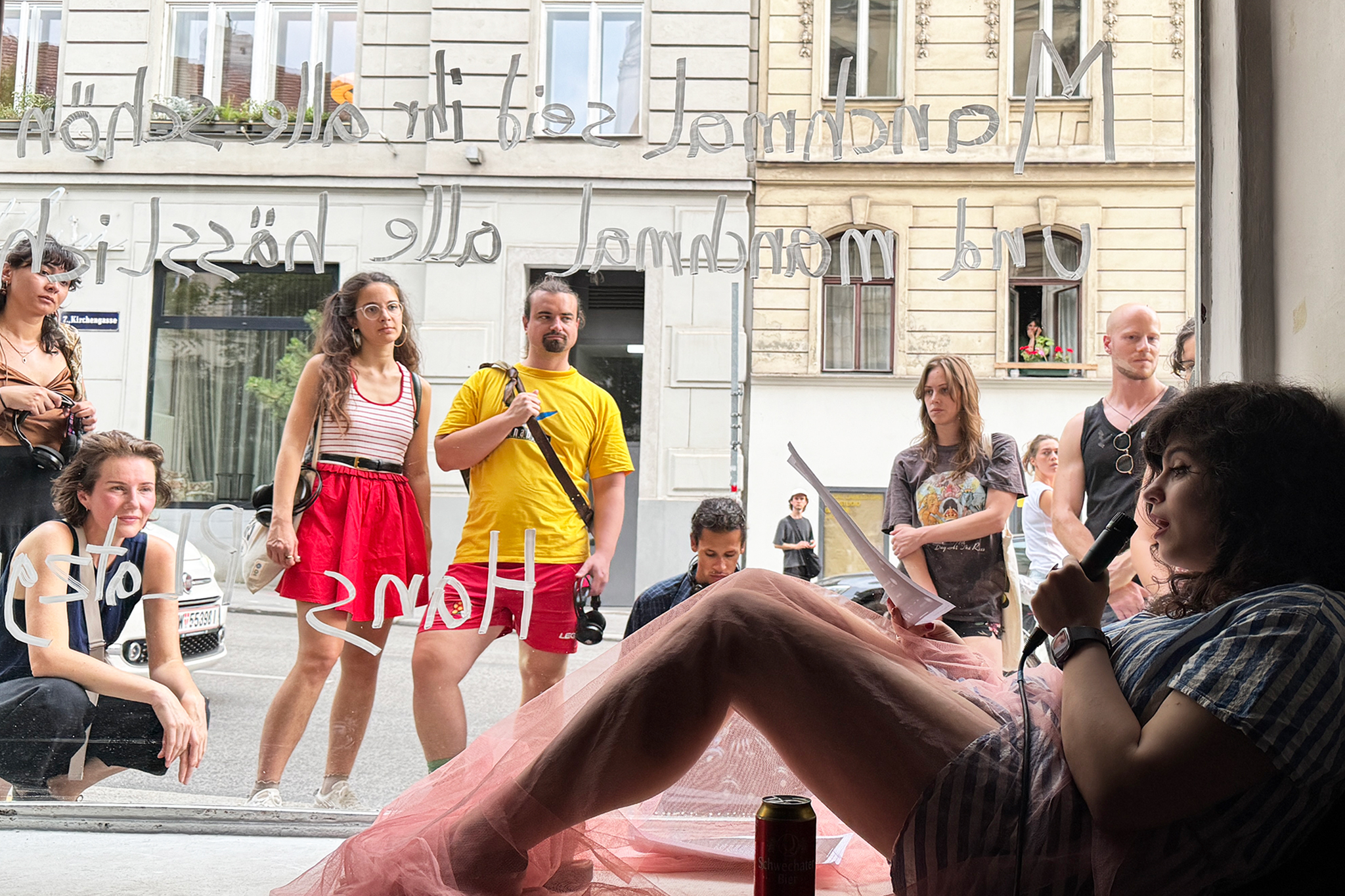
Sound-Walk @ Project Space k48
Investigating the "invisible architectures" of tacit perception. This segment involved a sound-walk and an on-site performance of students that engaged with the residual traces of the environment.
How do we perceive spaces not through their physical boundaries, but through their atmospheric and acoustic residues?
II. Places of (En-)Counter
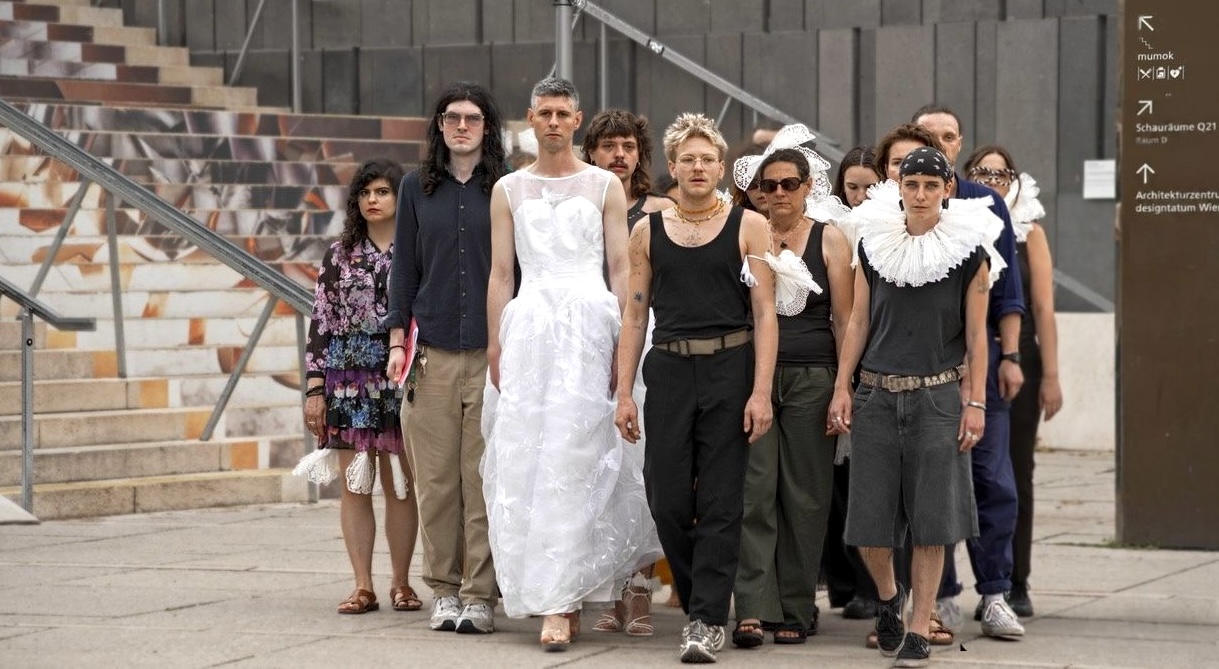
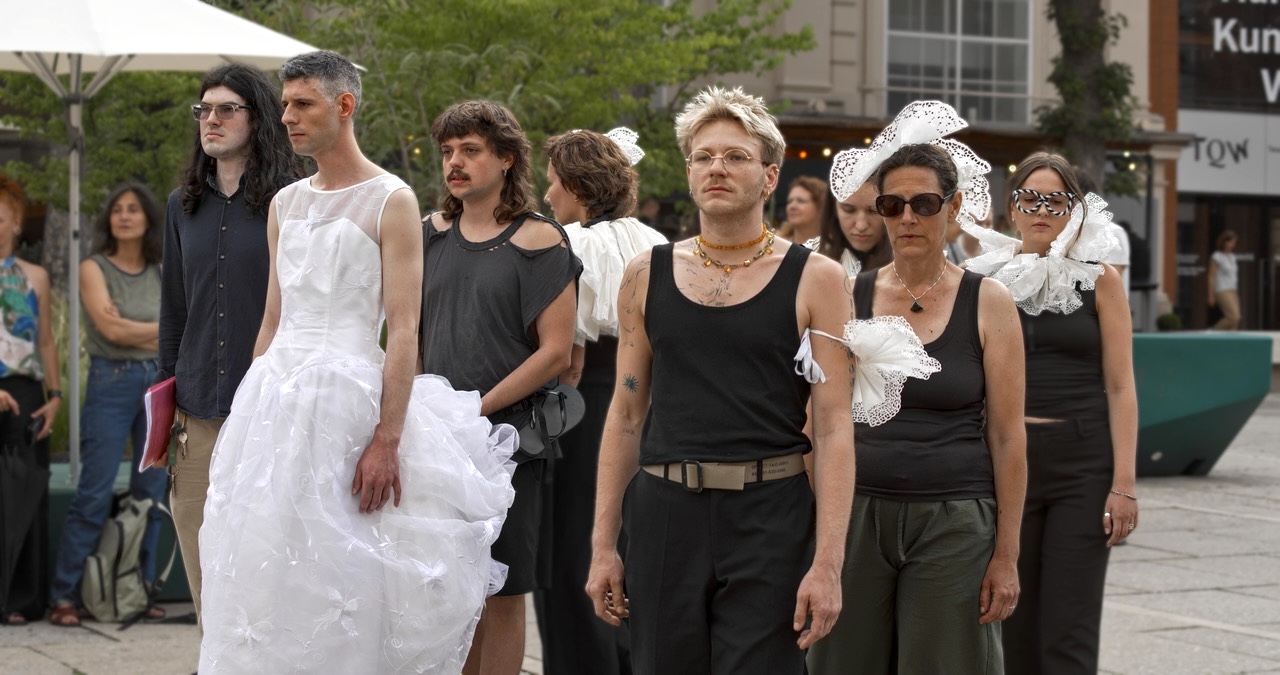
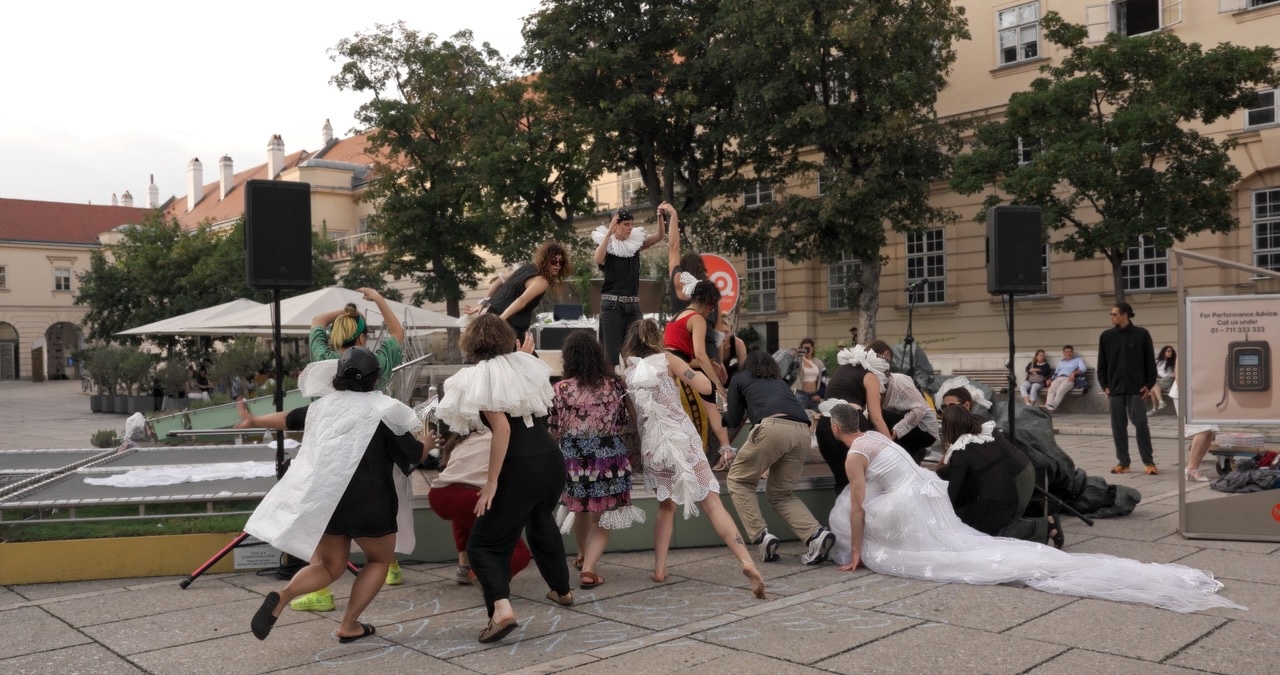
Performative Installation @ Museumsquartier Wien (MQ) Summer Stage
Students of the Angewandte Performance Lab and the Dept. of Art and Communicative Practice (kkp) of the University of Applied Arts Vienna, organized by Peter Kozek, Lucie Strecker and Timothy Nouzak.
Performative Installation @ Museumsquartier Wien (MQ) Summer Stage
Students of the Angewandte Performance Lab and the Dept. of Art and Communicative Practice (kkp) of the University of Applied Arts Vienna, organized by Peter Kozek, Lucie Strecker and Timothy Nouzak.
Sitting, observing, and (co-)feeling. The Open Stage—conceived as an open-ended performance format—has become a vibrant social anchor at the Angewandte Performance Lab Studio of the University of Applied Arts Vienna. Now, it finds its ecstatic expansion in the MQ: Moving bodies, a bench by artist Annette Wehrmann – created for the purposeless passing of time at MQ – and a DJ booth. As satellites of the everyday, sculpture and intervention open up dynamic social processes.
More information here:
https://www.mqw.at/en/program/places-of-counter
III. Echoes of Co-Presence
Student Installation @ Neues Haus für Kunst und Wissenschaft (ehem. PSK Postsparkasse)
APL Studio
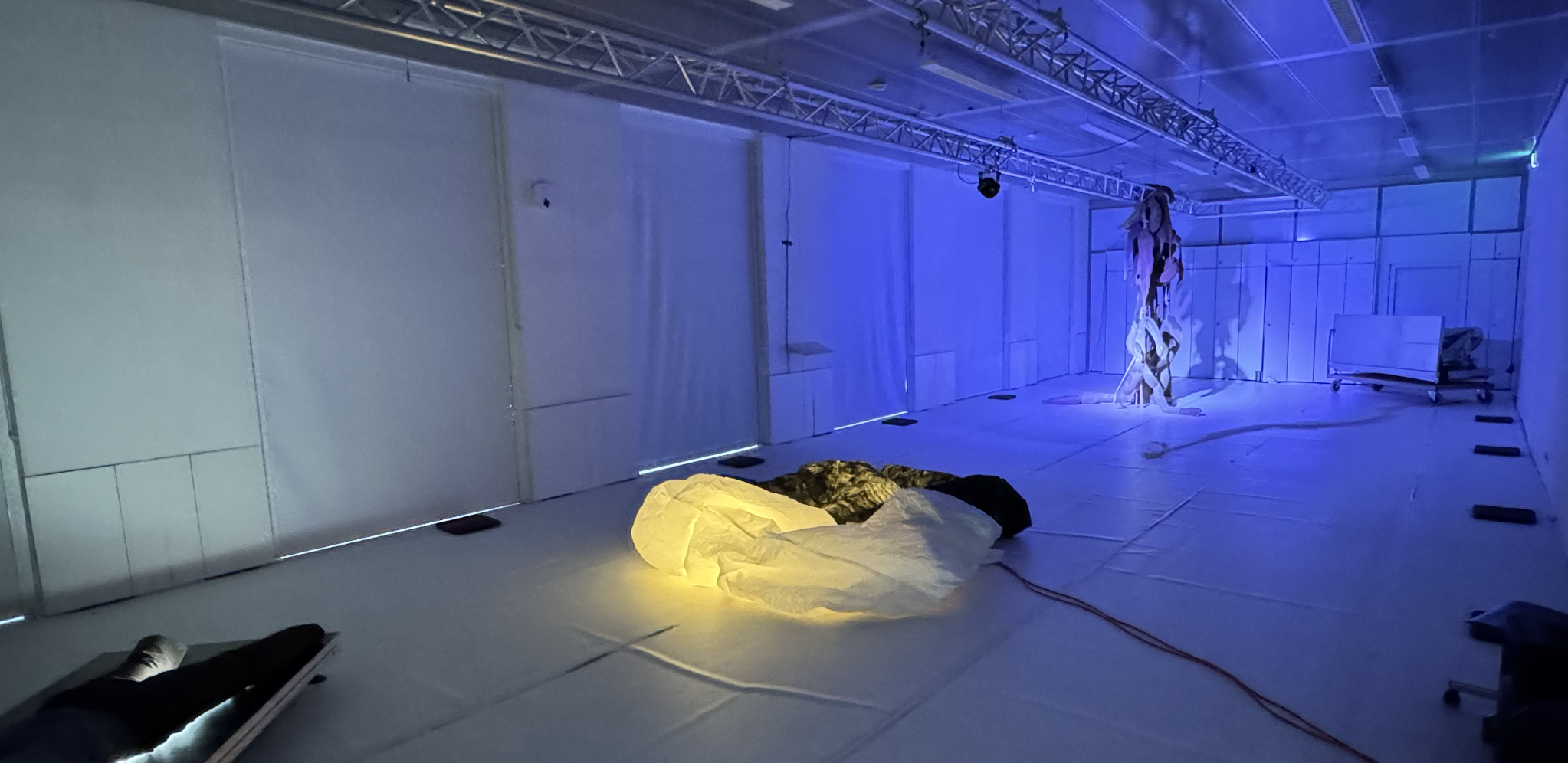
Within the spaces of the Angewandte Performance Lab various synergies & affinities converge, leaving tacit fragments behind —discarded sculptural prototypes, rehearsal dust, data glitches. All these leftovers are precious indices of a continuously unfolding collective practice. During the Festival, the APL shapeshifts into a performative landscape, revealing how production inscribes itself through what it leaves behind and how these traces quietly sketch alternative futures.
Students of the Angewandte Performance Laboratory in collaboration with Peter Kozek and Timothy Nouzak
More information here:
https://angewandtefestival.at/en/2025/beitraege/echoes-of-copresence-the-choreography-of-things-2025-055
![]()
Student Installation @ Neues Haus für Kunst und Wissenschaft (ehem. PSK Postsparkasse)
APL Studio
Within the spaces of the Angewandte Performance Lab various synergies & affinities converge, leaving tacit fragments behind —discarded sculptural prototypes, rehearsal dust, data glitches. All these leftovers are precious indices of a continuously unfolding collective practice. During the Festival, the APL shapeshifts into a performative landscape, revealing how production inscribes itself through what it leaves behind and how these traces quietly sketch alternative futures.
Students of the Angewandte Performance Laboratory in collaboration with Peter Kozek and Timothy Nouzak
More information here:
https://angewandtefestival.at/en/2025/beitraege/echoes-of-copresence-the-choreography-of-things-2025-055
MQ, Places of (En-)Counter, 2025. © Francesca Centonze
Exhibition: ARCHIVE OF INTERACTIVE ART
Vilnius (LT), 2024
Co-Curation at VDA - Vilniaus dailės akademija
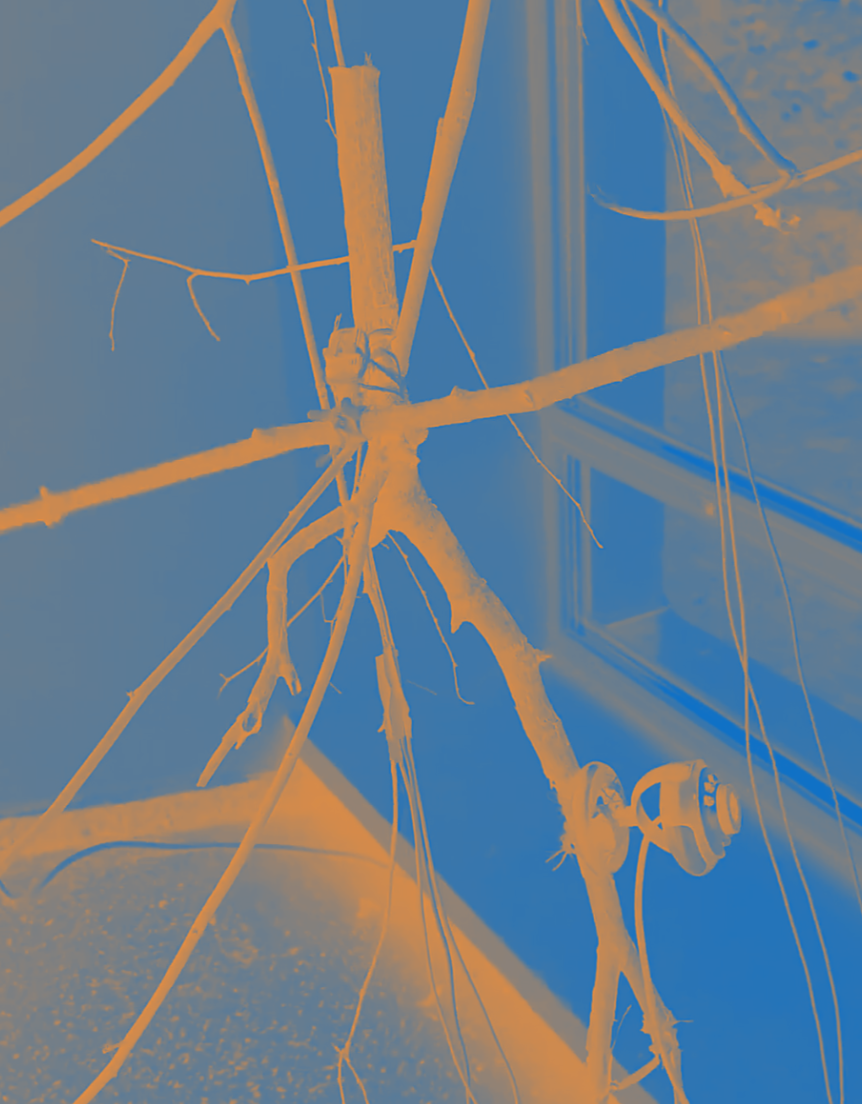
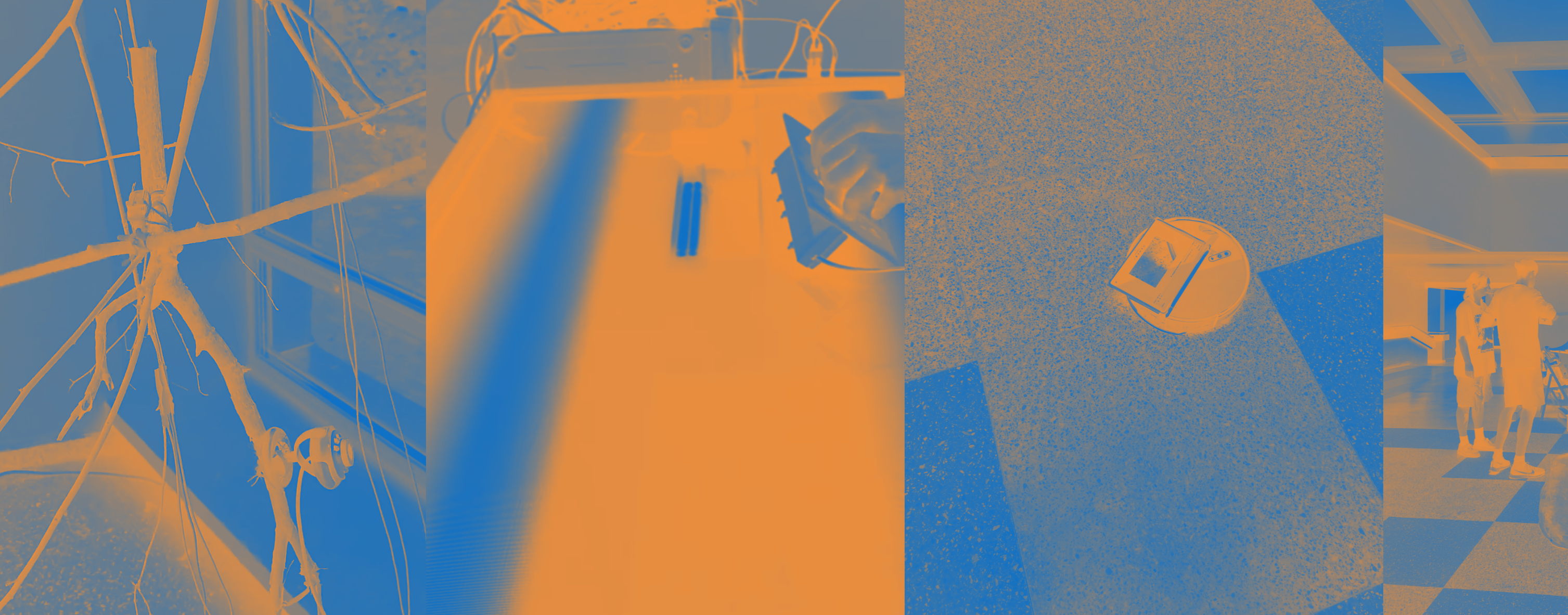
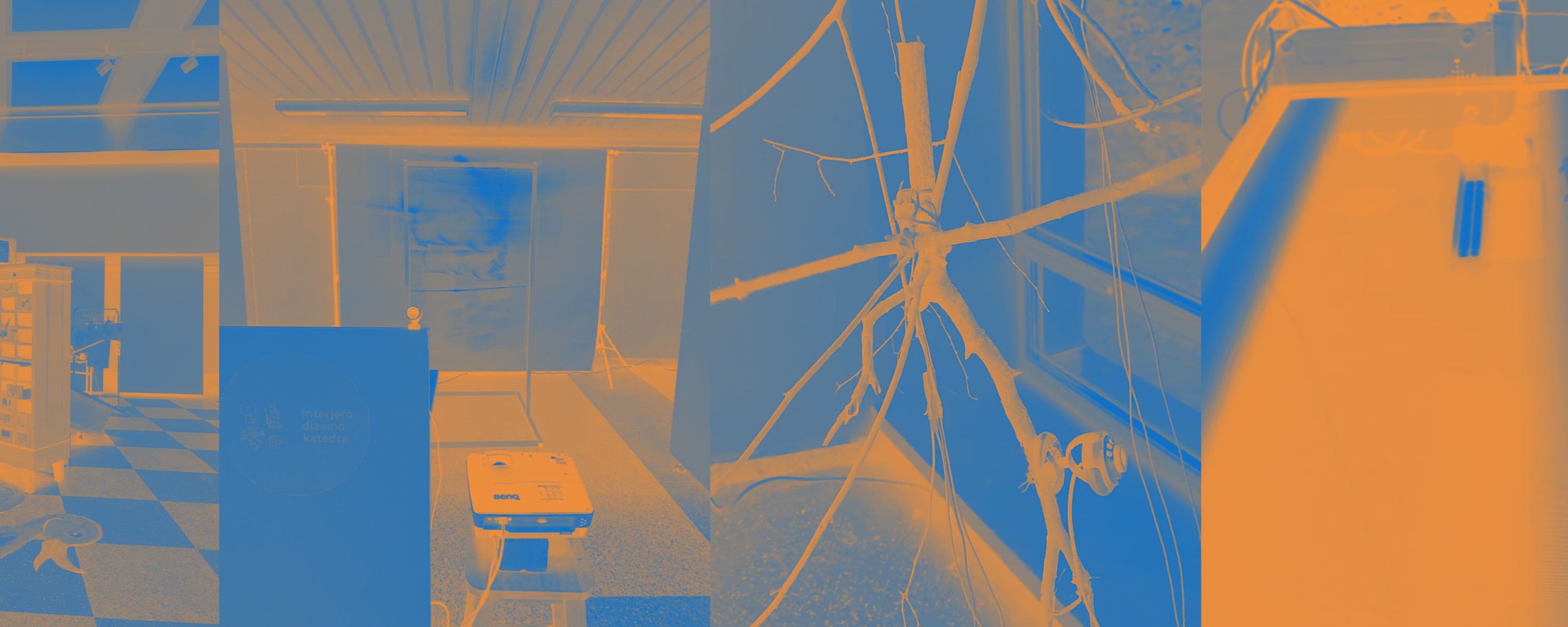
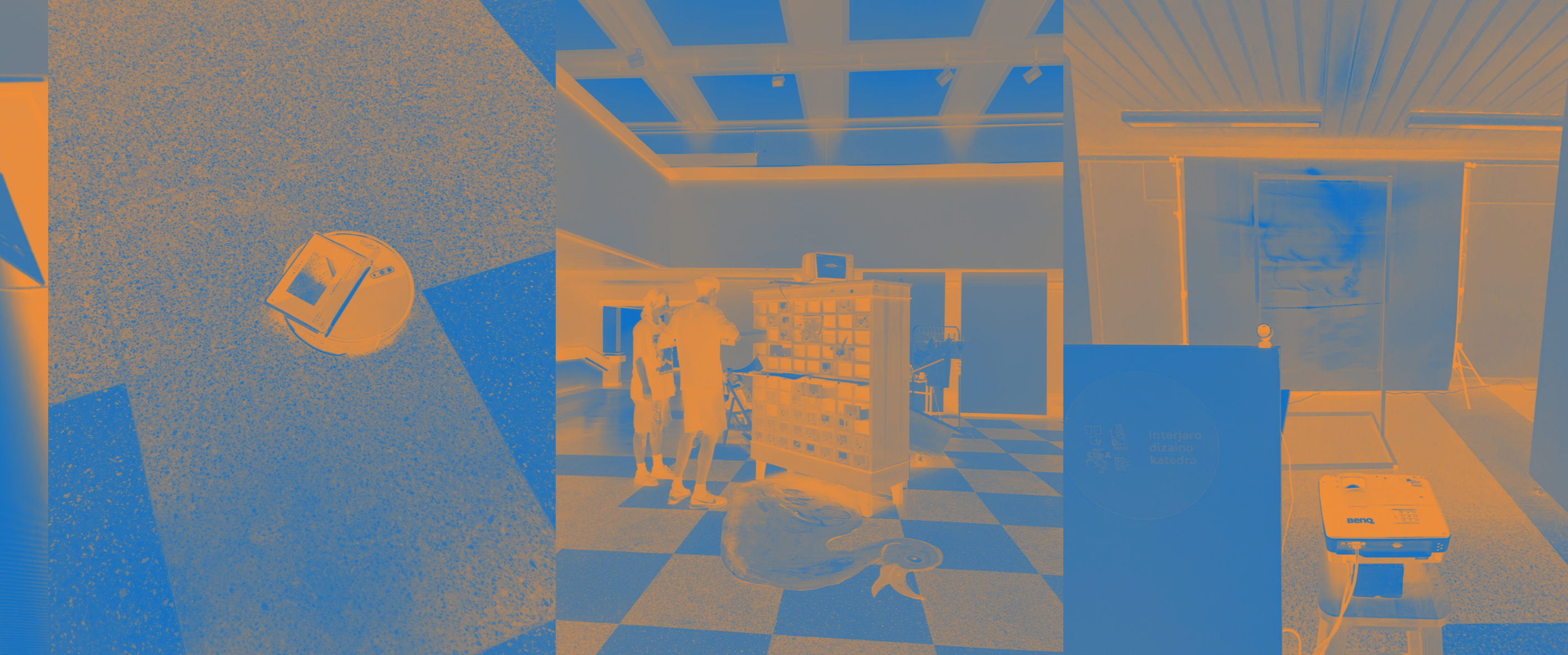
Archive of Interactive Art is a co-curated exhibition and research platform developed in collaboration with Vygintas Orlovas. It approaches interactive art through documentation, typologies, and audience-led navigation, treating “interaction” not as a single medium, but as a set of distinct artistic strategies.
Vilnius (LT), 2024
Co-Curation at VDA - Vilniaus dailės akademija
Archive of Interactive Art is a co-curated exhibition and research platform developed in collaboration with Vygintas Orlovas. It approaches interactive art through documentation, typologies, and audience-led navigation, treating “interaction” not as a single medium, but as a set of distinct artistic strategies.
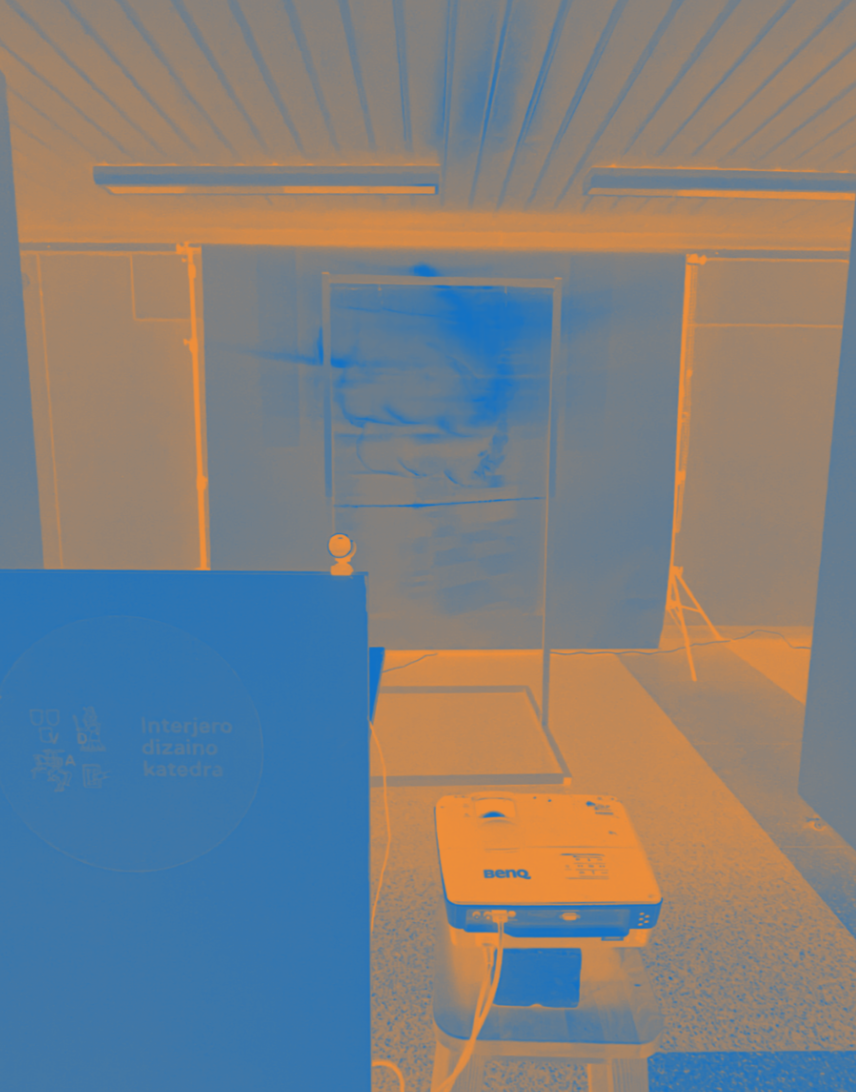
Exhibition as a navigable archive.
The exhibition builds a shared space for collecting and composing documentation of interactive works—images, videos, interface descriptions, and contextual materials—so that pieces can be read across formats, generations, and technological conditions. Rather than simply presenting digital practice, the project asks what an interactive work does: how does interaction shape us, structure attention, and position viewers as active, dialogic agents.
One response lies in the form of access—how materials are organised, how visitors orient themselves within a “data territory,” and how exploration becomes the core experience of the show.
Strategies within interactive art
The curatorial framework draws on Ryszard W. Kluszczyński’s typology (2010), which differentiates modes of interaction without reducing them to a purely technical narrative:
- Strategy of Archives: interaction unfolds as exploration of collected resources (audio/visual data, traces, documentation), guided by maps and navigational tools.
- Strategy of Game: interaction is structured through play: rules, roles, and feedback loops, where the work evolves through the encounter itself.
- Strategy of Instrument: interaction is performative; the interface functions as an instrument for real-time production rather than browsing pre-arranged content.
- Strategy of Spectacle: a paradoxical return to staged viewing, where “the event” becomes central and interaction is framed as spectacle.
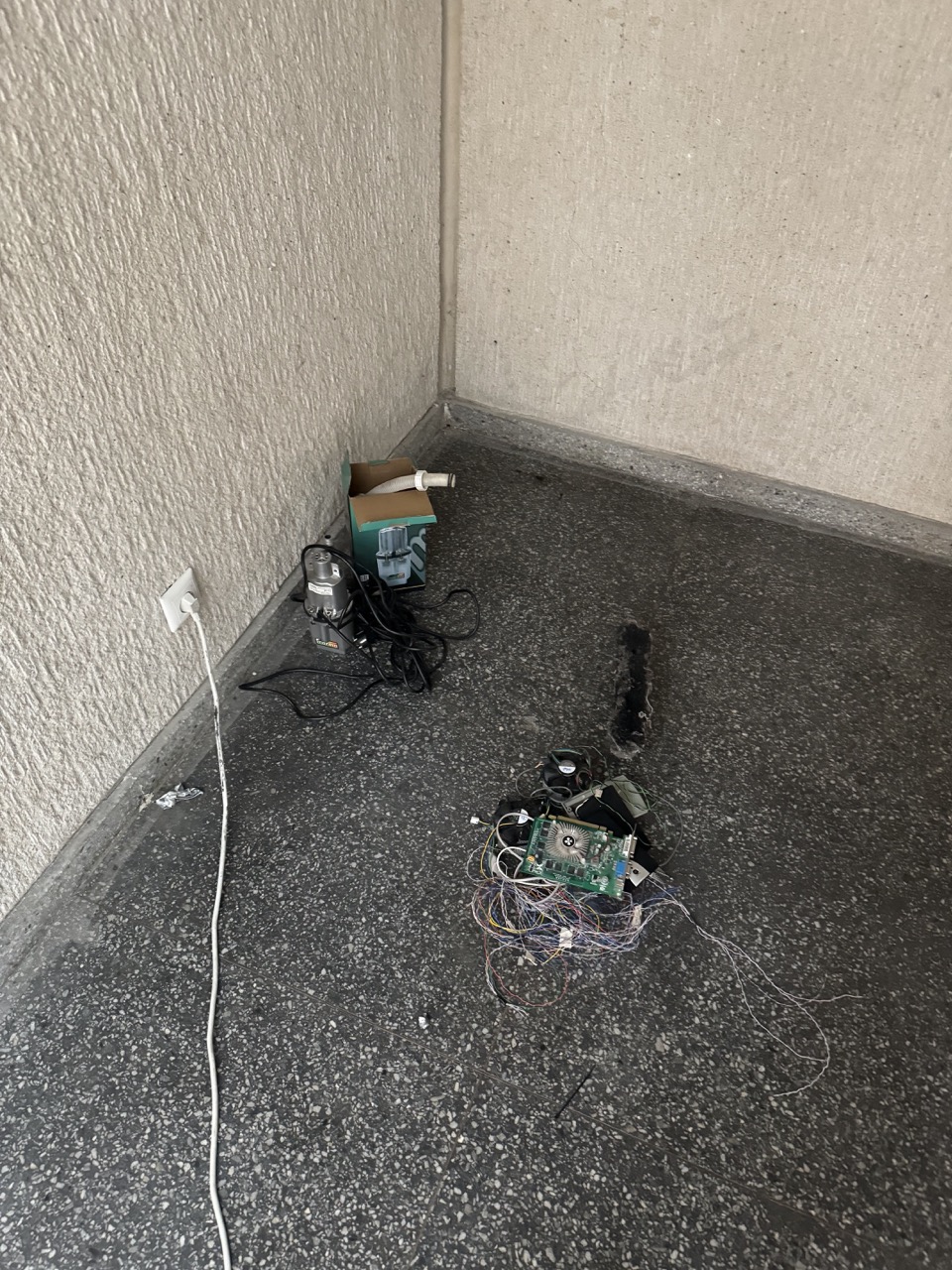
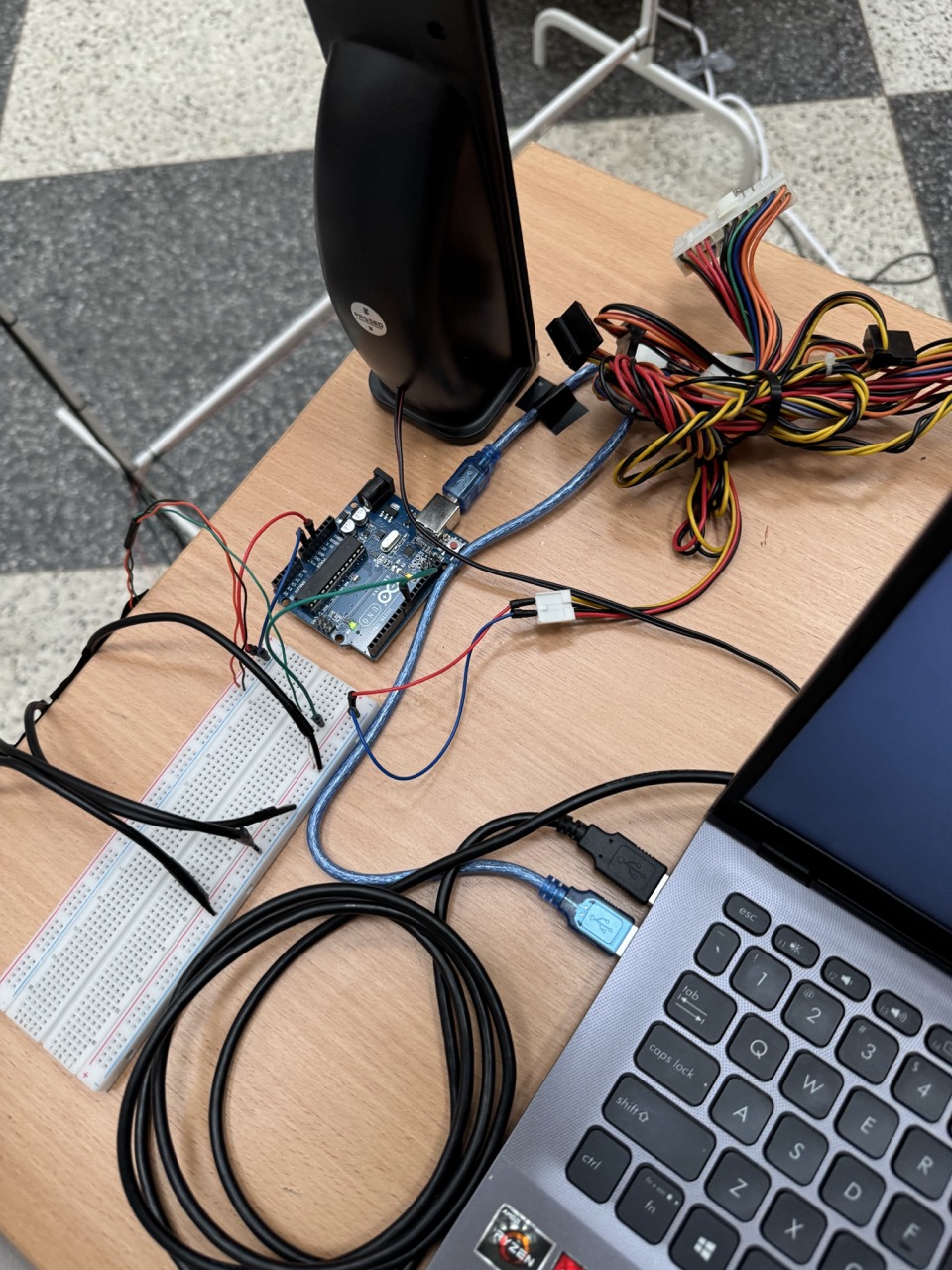
Curatorial contribution.
As co-curator, Timothy Nouzak contributed to shaping the exhibition’s structure and its modes of access: how works are contextualised, how documentation becomes readable as an interface of understanding, and how audiences navigate between artworks, materials, and concepts. The project treats participation not as secondary material, but as a curatorial method—a socially-engaged tool for comparison, cross-reading, and shared interpretation.
Platform logic: documentation as interface.
Viewers move through the archive via tags, categories, and conceptual groupings—producing their own pathways through the collection. In this sense, navigation becomes a form of interpretation: a distributed way of composing meaning across works, contexts, and strategies of interaction.
As co-curator, Timothy Nouzak contributed to shaping the exhibition’s structure and its modes of access: how works are contextualised, how documentation becomes readable as an interface of understanding, and how audiences navigate between artworks, materials, and concepts. The project treats participation not as secondary material, but as a curatorial method—a socially-engaged tool for comparison, cross-reading, and shared interpretation.
Platform logic: documentation as interface.
Viewers move through the archive via tags, categories, and conceptual groupings—producing their own pathways through the collection. In this sense, navigation becomes a form of interpretation: a distributed way of composing meaning across works, contexts, and strategies of interaction.
Initiator & funding: Initiated by Vygintas Orlovas as part of the postdoctoral project “Exploring strategies of interactive art and active participation" (Nr. S-PD-22-29), funded by the Research Council of Lithuania.
Support: Vilnius Academy of Arts + Erasmus Mobility Programme.
![]()
Support: Vilnius Academy of Arts + Erasmus Mobility Programme.
Funded research project at University of Applied Arts (Angewandte) through a collaboration between APL - Angewandte Performance Laboratory, HUFAK and the INTRA research project 'Archive in Practice’.
Project Lead: Charlotta Ruth, PhD and Timothy Nouzak
In collaboration with: Performatorium (Olivia Jaques and Marlies Surtmann), Mariella Greil, PhD and Jasmin Schaitl
Invited HOWTBT Artist Projects: Charlotte Bastam & Verena Frauenlob, Valentino Skarwan & Su Huber, Aleksandar Gabrovsky & Kaloyan Vasev and Shahrzad Nazarpour & Mortezad Mohammadi
Photo Documentation: Marlies Surtmann
Supported by: APL - Angewandte Performance Laboratory, HUFAK and the INTRA research project 'Archive in Practice’
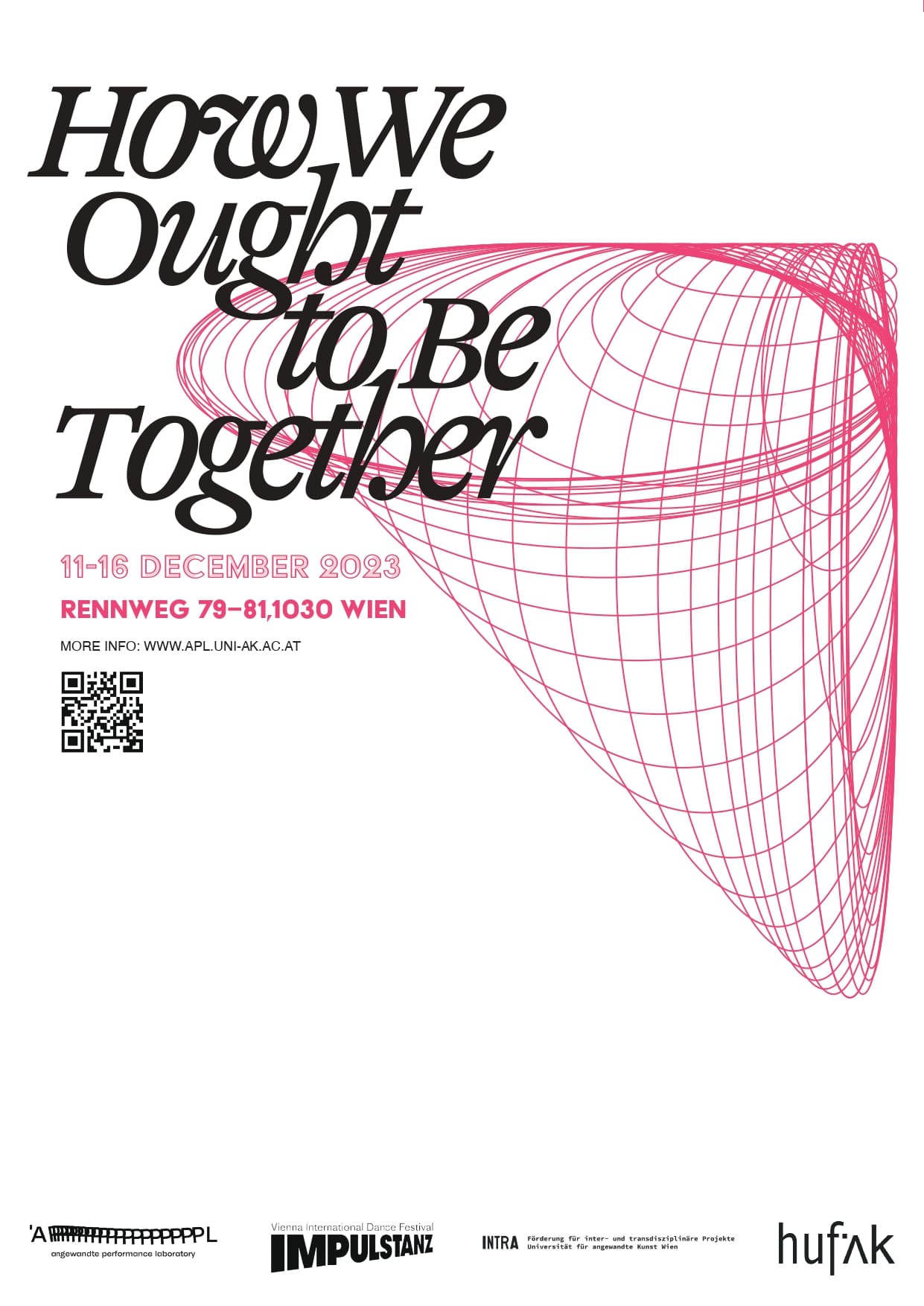
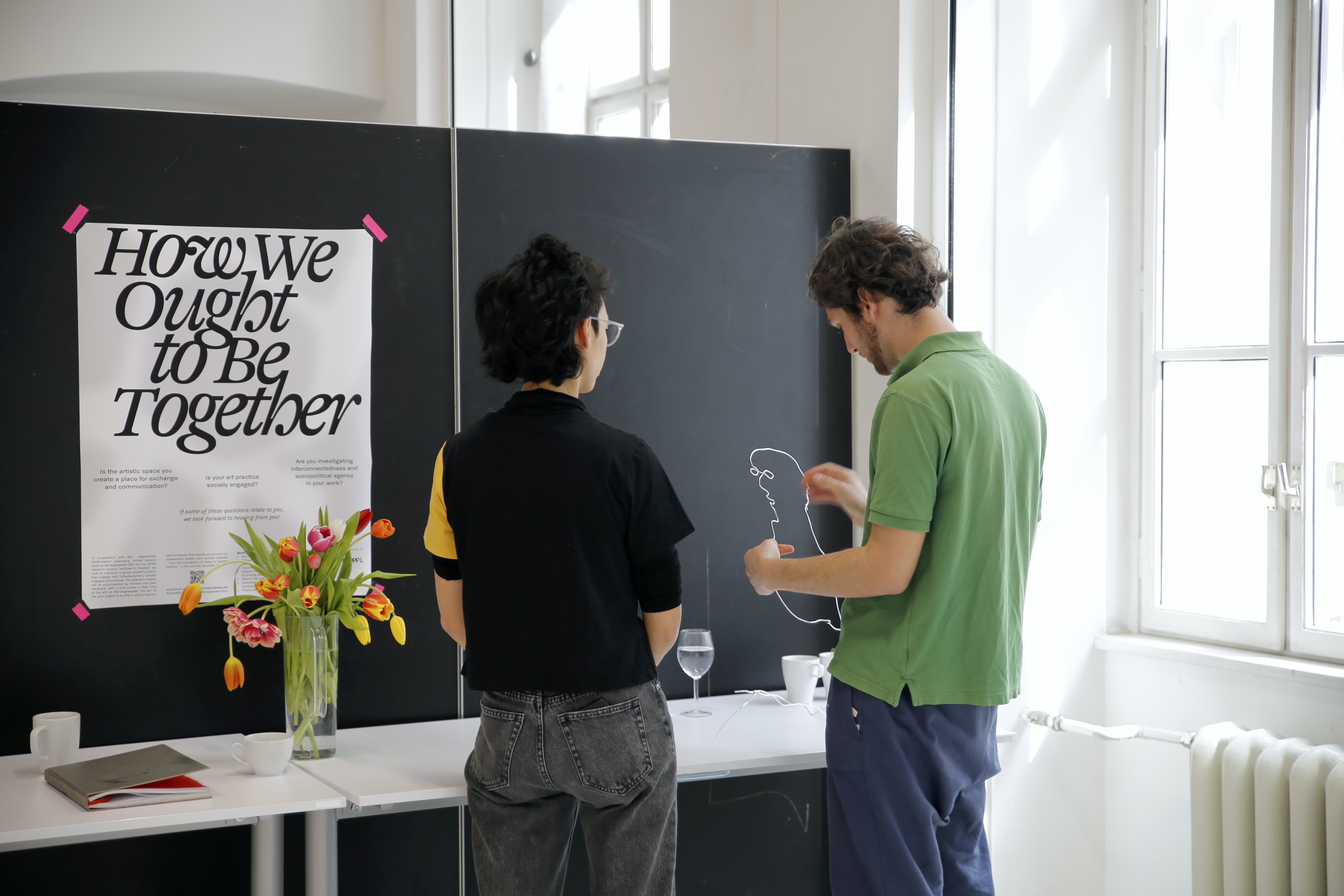
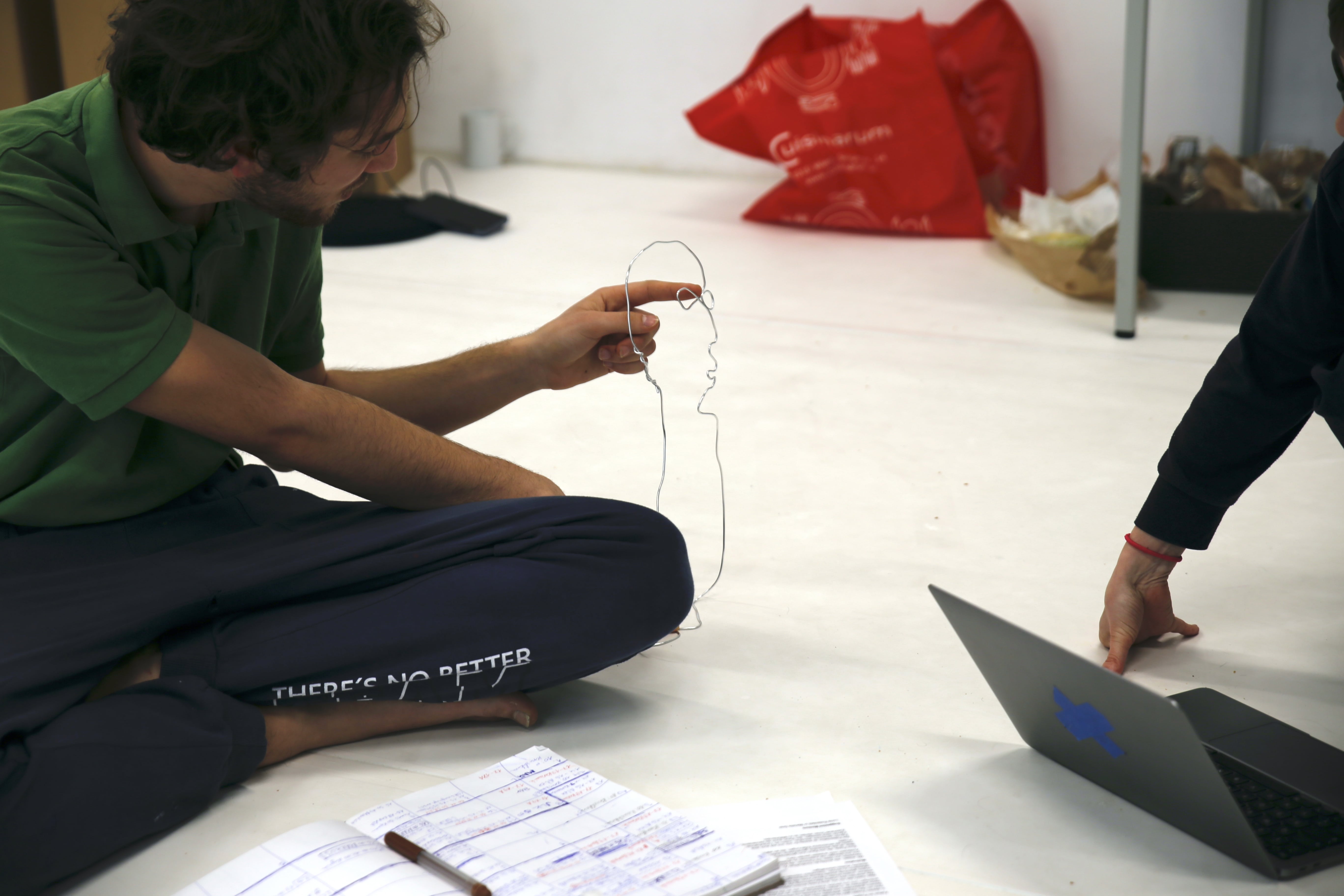
„How We Ought To Be Together“ (HOWTBT) was driven by the overarching goal of rethinking university politics and student engagement through the perspective of socially-engaged practice.
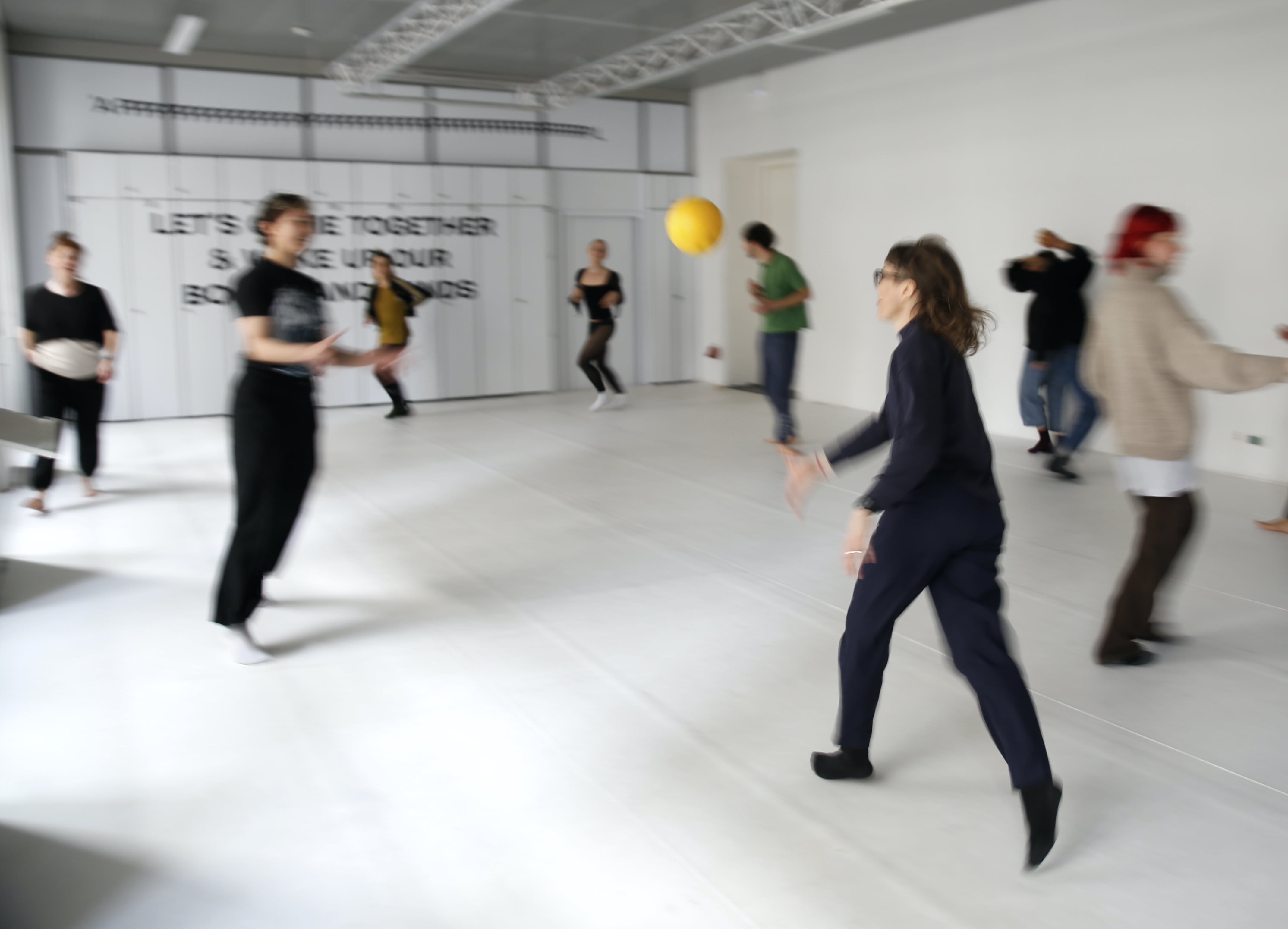
The project incorporated a combination of artistic and scientific methodologies through embodied communication design and feedback practice by exploring alternative cultures of participation, fostering collective decision-making processes and creating an inclusive and empowering environment within and beyond the university. One of the goals was to provide project funding of approximately 1000 euros for each of the invited HOWTBT artists. Additionally, the project sought to integrate embodied feedback practices, drawing on the expertise of PhD researcher Jasmin Schaitl, who developed a specific vocabulary of feedback practice modalities tailored to the individual embodied needs of groups
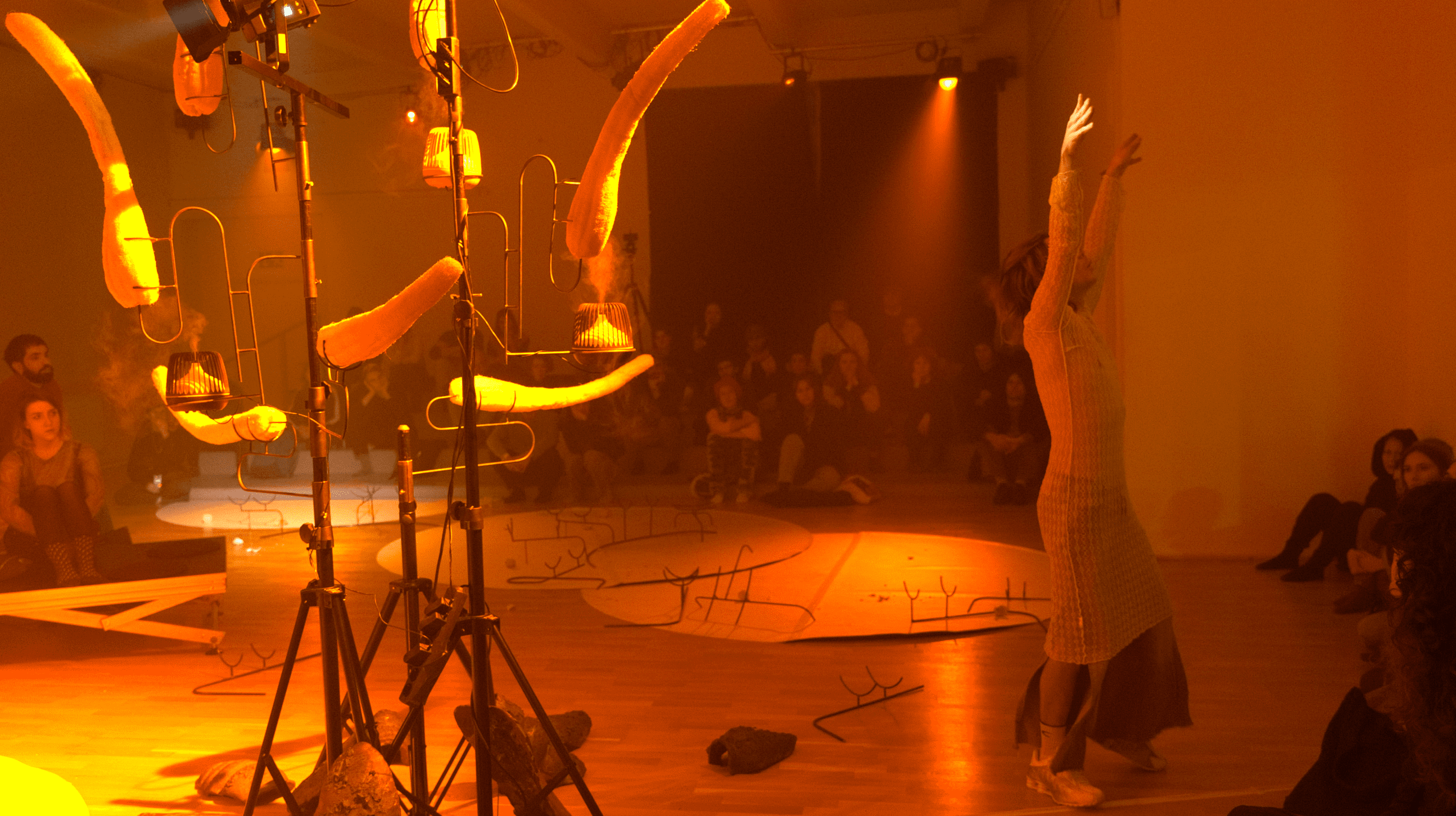
Embodied communication design formed a thereby fundamental pillar of the HOWTBT project. By emphasizing the use of the body as a powerful tool for expression and connection, participants were encouraged to explore the intersections between art, communication, and social change. This approach allowed for a deeper engagement with diverse perspectives and facilitated the development of projects that resonated on a sensory and affective level. Through embodied communication design, participants aimed to refelect on traditional forms of communication, by inviting dialogue and reflection that extended beyond mere intellectual understanding.
Embodied communication design formed a thereby fundamental pillar of the HOWTBT project. By emphasizing the use of the body as a powerful tool for expression and connection, participants were encouraged to explore the intersections between art, communication, and social change. This approach allowed for a deeper engagement with diverse perspectives and facilitated the development of projects that resonated on a sensory and affective level. Through embodied communication design, participants aimed to refelect on traditional forms of communication, by inviting dialogue and reflection that extended beyond mere intellectual understanding.
More information can be found here.
EDU PERFORM ART — International Symposium
Pedagogy of Visual Performance
Department of Intermedia and Digital Media
Banská Bystrica (SK), 2023
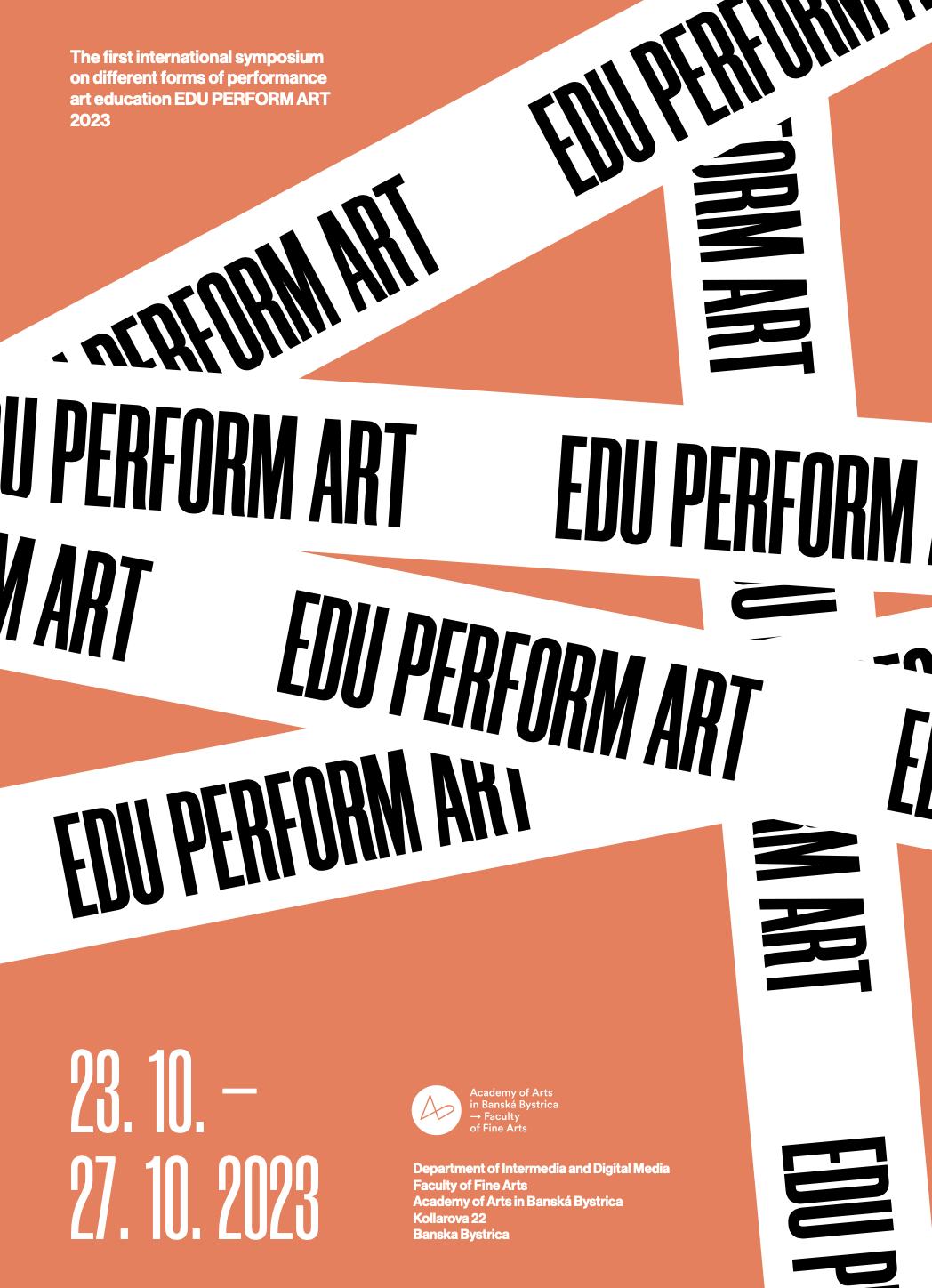
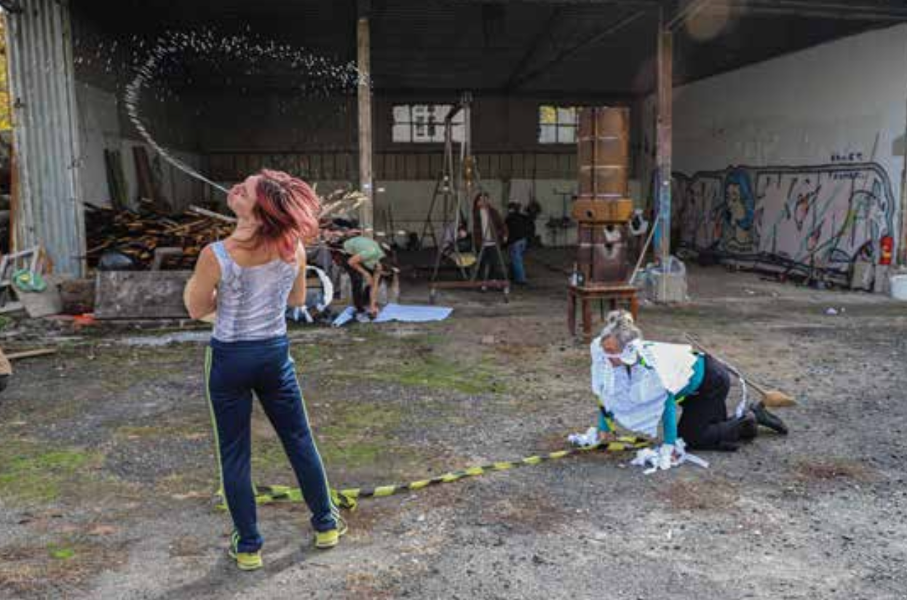
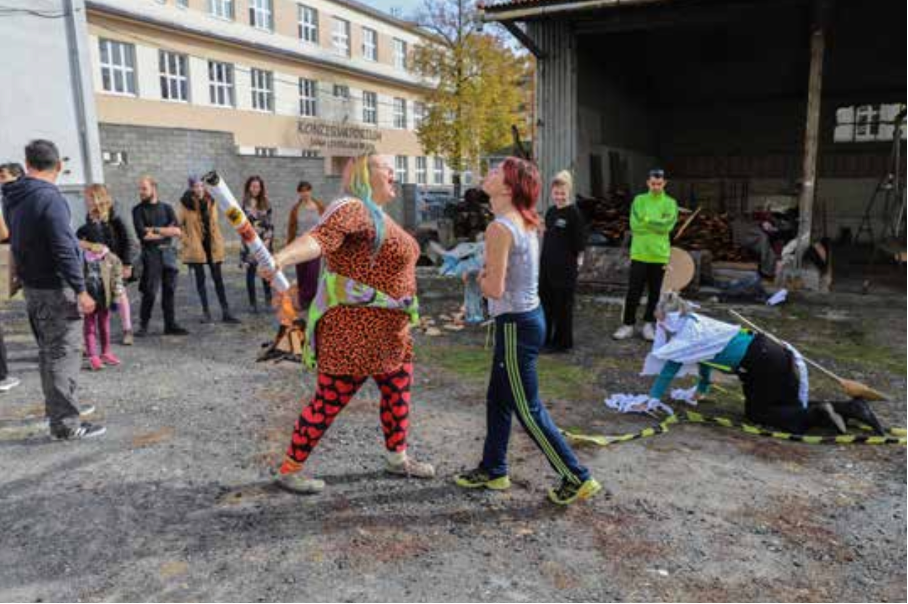
The first international EDU PERFORM ART symposium brought together artists, lecturers, and students to exchange approaches to performance pedagogy across Central Europe—combining presentations, discussions, and hands-on workshop formats. Within the context of the APL, Timothy Nouzak shared the first presentation and traveled with staff and students to the on-site exchange.
Keywords: performance pedagogy, visual performance, intermedia education, blended formats, embodied practice, international exchange, workshop-based learning
Department of Intermedia and Digital Media
Banská Bystrica (SK), 2023
The first international EDU PERFORM ART symposium brought together artists, lecturers, and students to exchange approaches to performance pedagogy across Central Europe—combining presentations, discussions, and hands-on workshop formats. Within the context of the APL, Timothy Nouzak shared the first presentation and traveled with staff and students to the on-site exchange.
Keywords: performance pedagogy, visual performance, intermedia education, blended formats, embodied practice, international exchange, workshop-based learning
Framework: ERASMUS+ Research & Student Mobility
Host: Department of Intermedia and Digital Media (IDM), Faculty of Fine Arts, Academy of Arts in Banská Bystrica
Blended format: online → on-site → public showcase
The symposium was structured as a blended learning and exchange format:
The program foregrounded non-hierarchical exchange between teaching and learning, and treated performance as an expanded pedagogical field—between embodied research, public address, and intermedial practice.
The symposium was structured as a blended learning and exchange format:
- Online conference (pre-symposium): papers, lectures, and course presentations by the international faculty.
- On-site intensive week in Banská Bystrica: workshops, discussions, and shared pedagogical experiments across different methods and contexts.
- Student project presentations (virtual/public): video-based outcomes presented online and as projection.
The program foregrounded non-hierarchical exchange between teaching and learning, and treated performance as an expanded pedagogical field—between embodied research, public address, and intermedial practice.
Student output/assignment (project component)
Participants developed an independent performative work, drawing freely on the skills and techniques acquired in the selected courses. The output was documented as a video performance (max. 10 minutes), delivered in advance for the planned presentation.
Participants developed an independent performative work, drawing freely on the skills and techniques acquired in the selected courses. The output was documented as a video performance (max. 10 minutes), delivered in advance for the planned presentation.
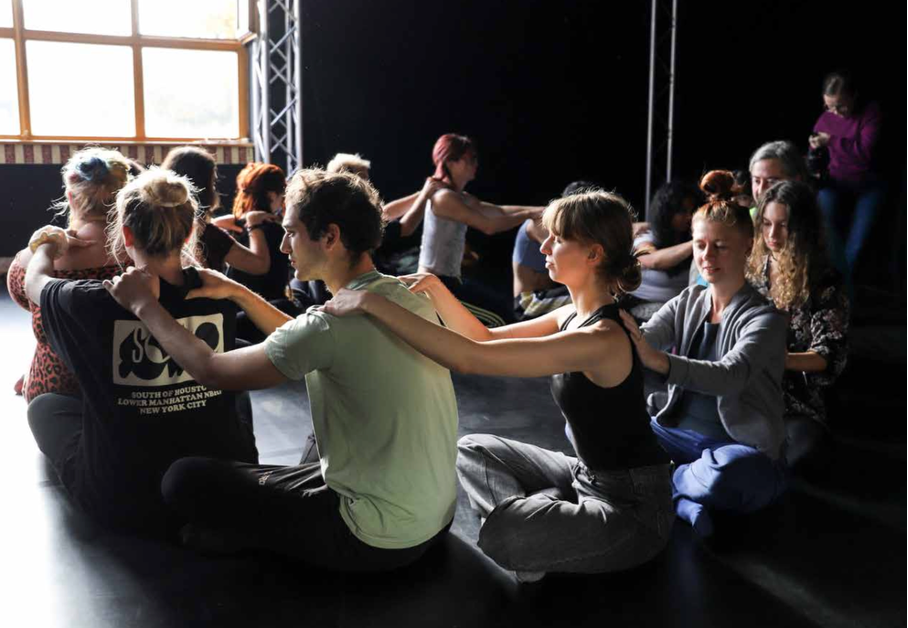
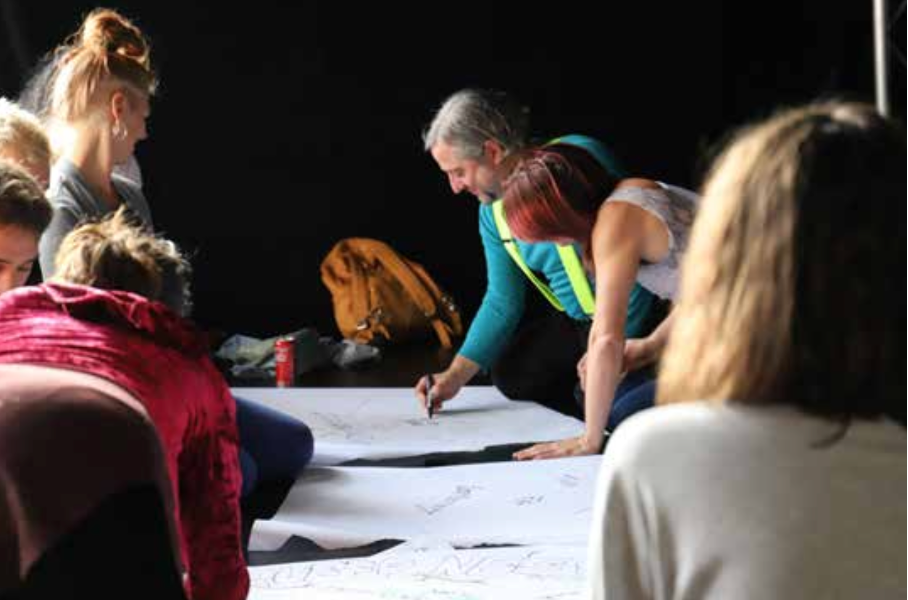
Participating schools (selection)
- University of Applied Arts Vienna, Austria (APL)
- Academy of Fine Arts in Prague, Czech Republic (AVU)
- Silesian University in Opava, Czech Republic (SU)
- Jan Evangelista Purkyně University in Ústí nad Labem, Czech Republic (UJEP)
- Moholy-Nagy University of Art and Design, Hungary (MOME)
- Budapest Metropolitan University, Hungary (METU)
Project reference
Project: EDU PERFORM ART 2023 (Erasmus+ BIP)
Project ID: 2023-1-SK01-KA131-HED-000117770-2
Project: EDU PERFORM ART 2023 (Erasmus+ BIP)
Project ID: 2023-1-SK01-KA131-HED-000117770-2
More Info you can find here.
Practice(!) Symposium — Tracing Presences
Künstlerhaus Factory & AIL (Angewandte Interdisciplinary Lab)
Vienna
Oct 27–29, 2022
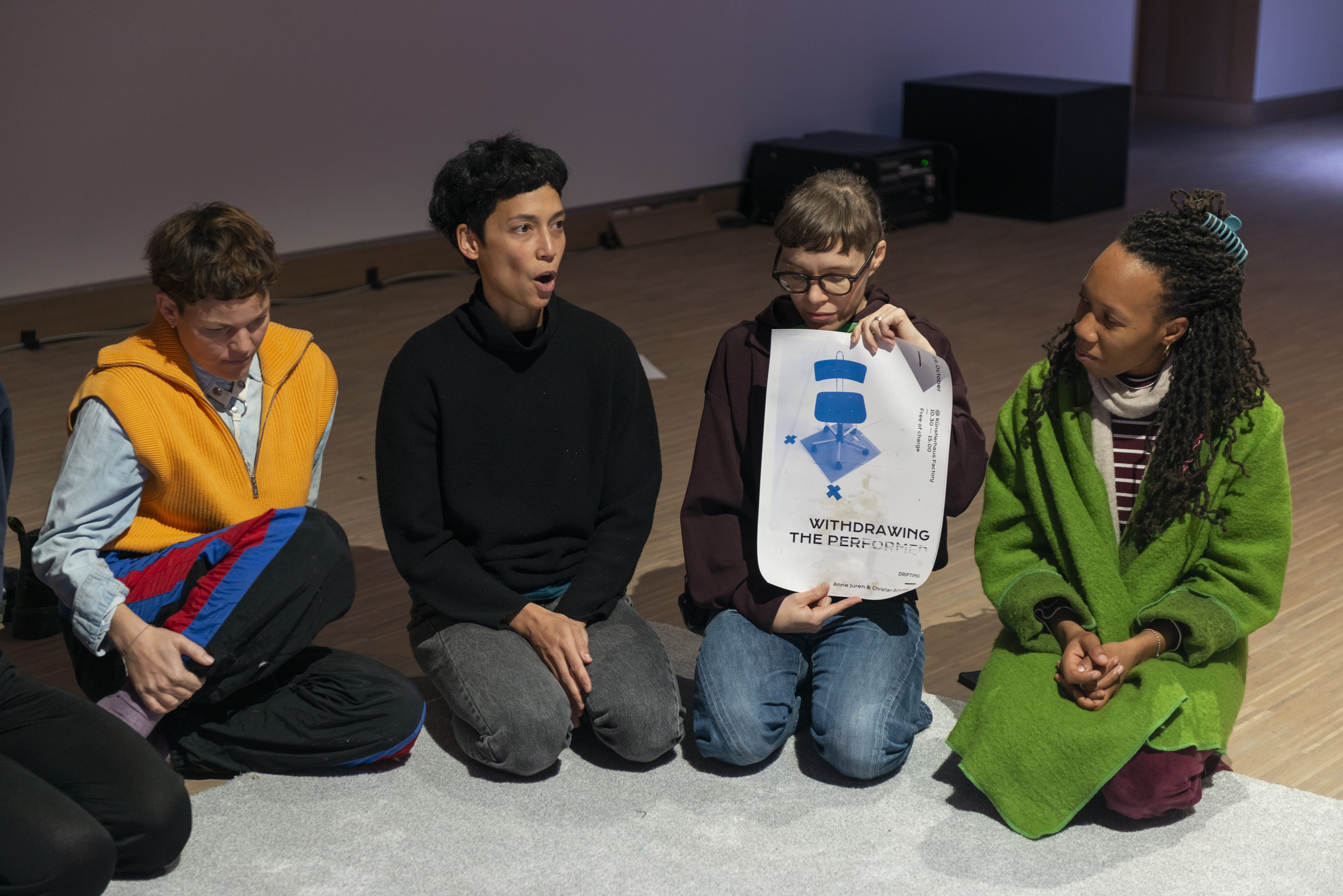
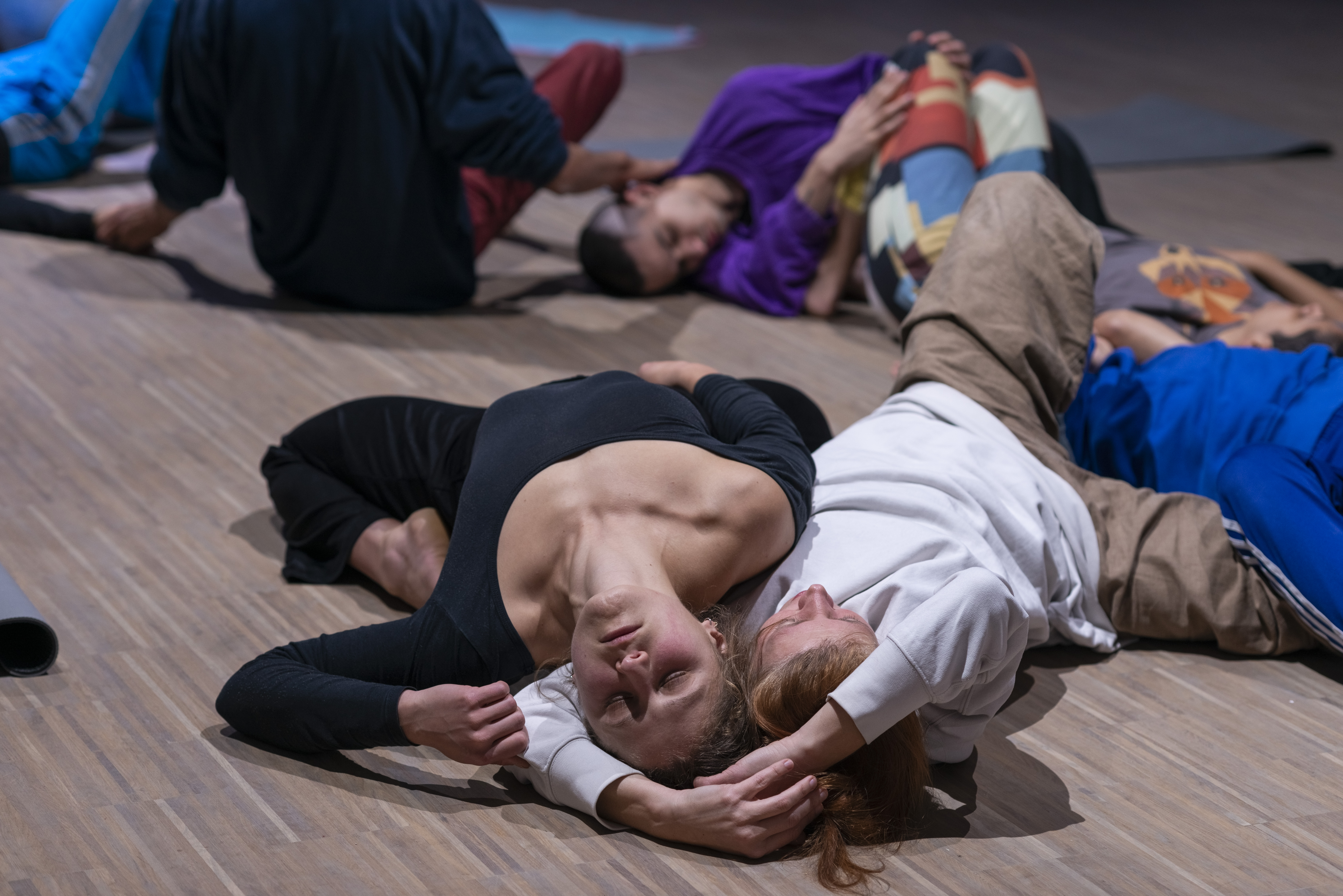
A three-day symposium combining the independent art scene with academic research contexts. "Tracing Presences" investigated the spectrum of immediate and mediated presence from the perspective of performative practices, aiming for knowledge through practice, participatory understanding, and applied awareness.
Concept & Organization: Angewandte Performance Lab (APL)
Morning Practices: Veza Fernández, Sofie Fatouretchi, Anne Juren, Bita Bell, Asher O'Gorman
Participatory Sessions & Research: Mary Maggic, Performatorium (Olivia Jaques/Marlies Surtmann), Charlotta Ruth, Jasmin Schaitl, Mariella Greil, Lucie Strecker
Supported by: Künstlerhaus Wien, University of Applied Arts Vienna, INTRA
Tracing presences.
Conceived and organised by the Angewandte Performance Lab, the symposium traced the artistic and theoretical spectrum of presence. The program was structured to move from embodied experience to reflective discourse.
The days opened with Morning Practices, (curated by Timothy Nouzak), inviting participants into specific somatic and sonic worlds: from Veza Fernández's "Messy Polyphonies", exploring visceral vocal practices, to Anne Juren’s "Fantasmical Anatomies" and Asher O'Gorman’s "AfforDances" which guided dialogues with inanimate objects. These sessions set the ground for a day of "learning-by-doing," moving away from frontal lectures towards a laboratory format where the body itself acts as the primary site of research.
Following the physical engagement, Participatory Sessions (curated and organised throughout the week by various APL members), deepened the inquiry into specific methodologies. Notable contributions included "Morphogenesis" by Mary Maggic, investigating the micro-performativity of hormones, and the collaborative research "Withdrawing the Performer" by Anne Juren & Christian Schröder, hosted by APL-members Charlotta Ruth & Jasmin Schaitl.
Conceived and organised by the Angewandte Performance Lab, the symposium traced the artistic and theoretical spectrum of presence. The program was structured to move from embodied experience to reflective discourse.
The days opened with Morning Practices, (curated by Timothy Nouzak), inviting participants into specific somatic and sonic worlds: from Veza Fernández's "Messy Polyphonies", exploring visceral vocal practices, to Anne Juren’s "Fantasmical Anatomies" and Asher O'Gorman’s "AfforDances" which guided dialogues with inanimate objects. These sessions set the ground for a day of "learning-by-doing," moving away from frontal lectures towards a laboratory format where the body itself acts as the primary site of research.
Following the physical engagement, Participatory Sessions (curated and organised throughout the week by various APL members), deepened the inquiry into specific methodologies. Notable contributions included "Morphogenesis" by Mary Maggic, investigating the micro-performativity of hormones, and the collaborative research "Withdrawing the Performer" by Anne Juren & Christian Schröder, hosted by APL-members Charlotta Ruth & Jasmin Schaitl.
Archives in Practice
Mapping of Performative Practices & Living Documents
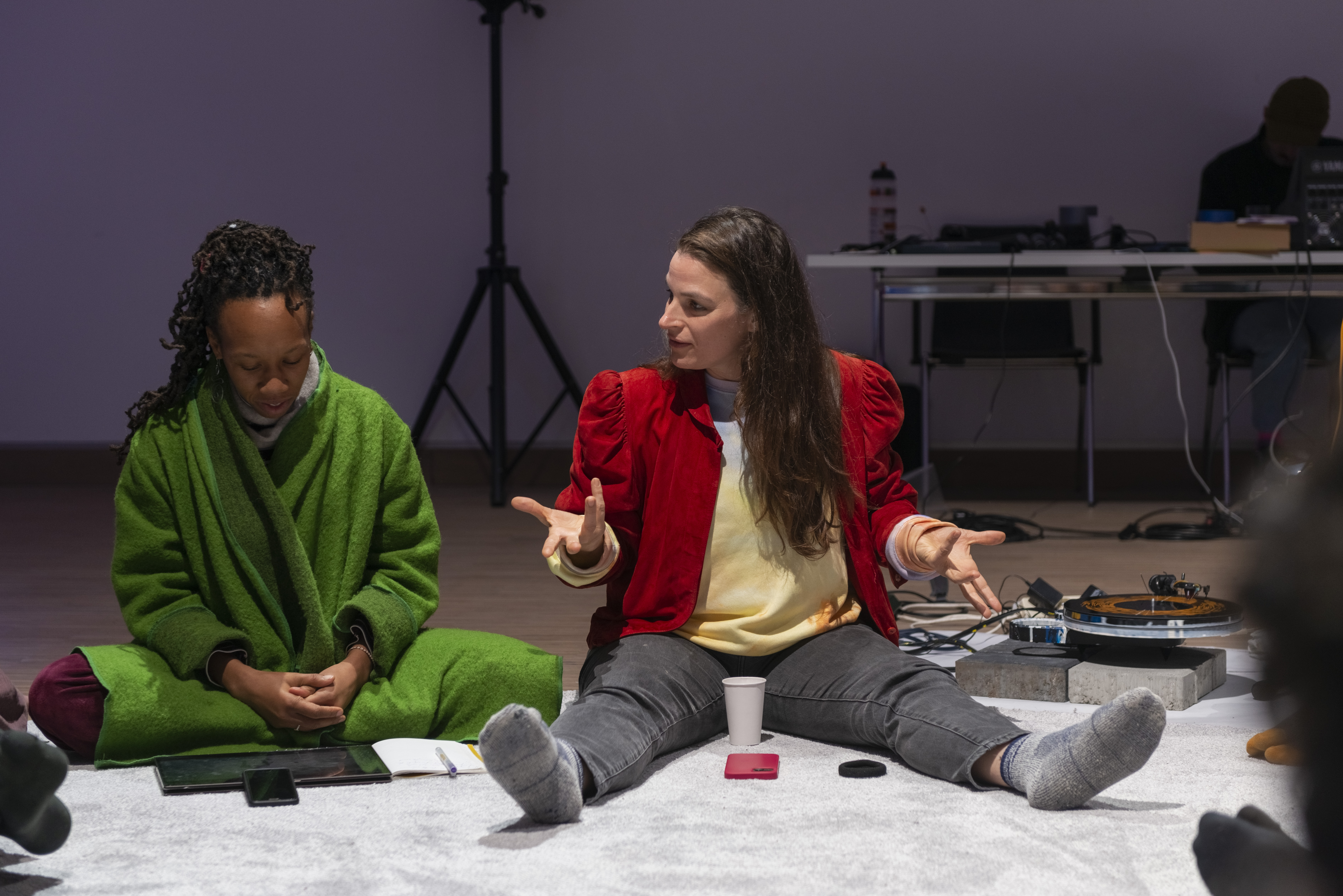
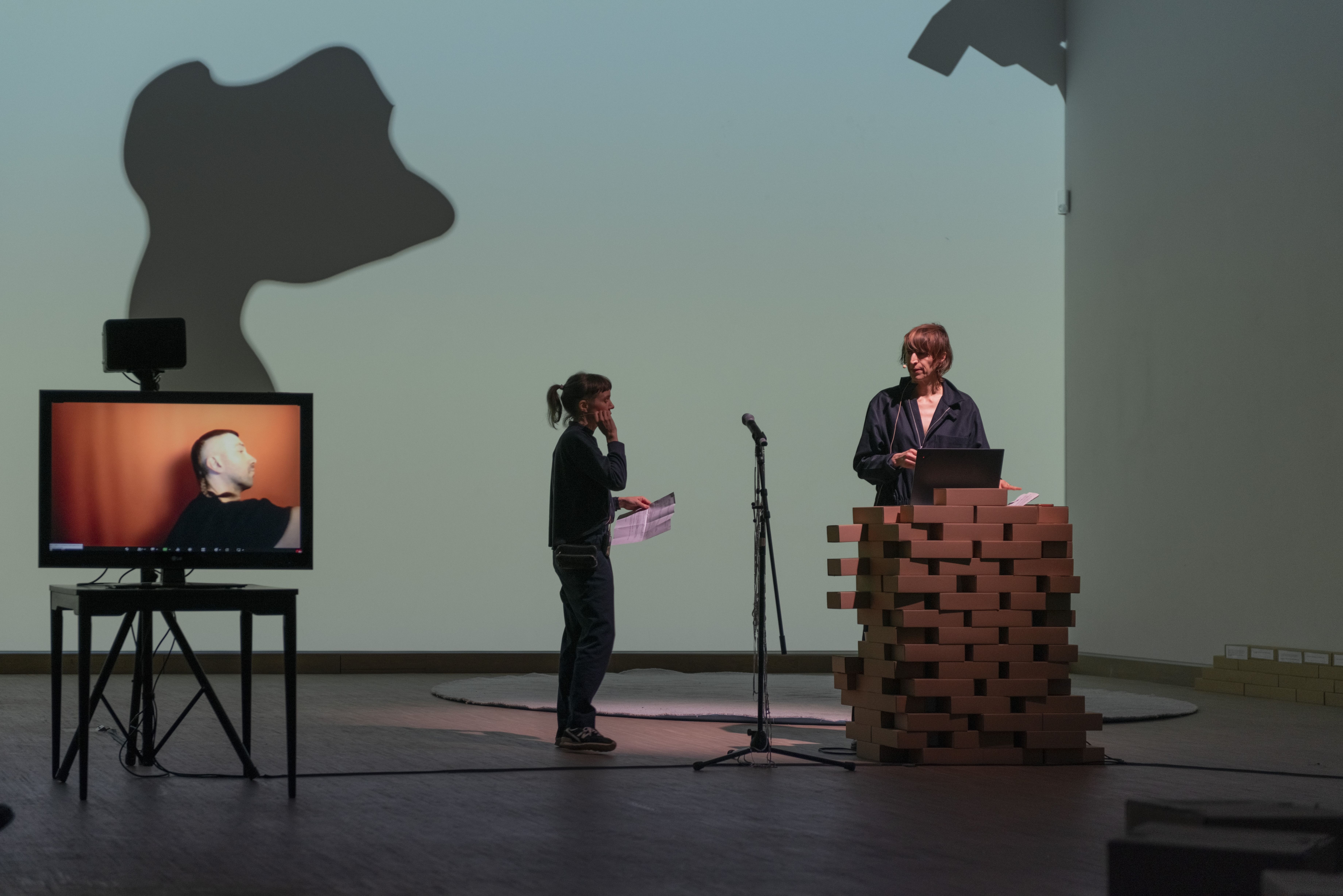
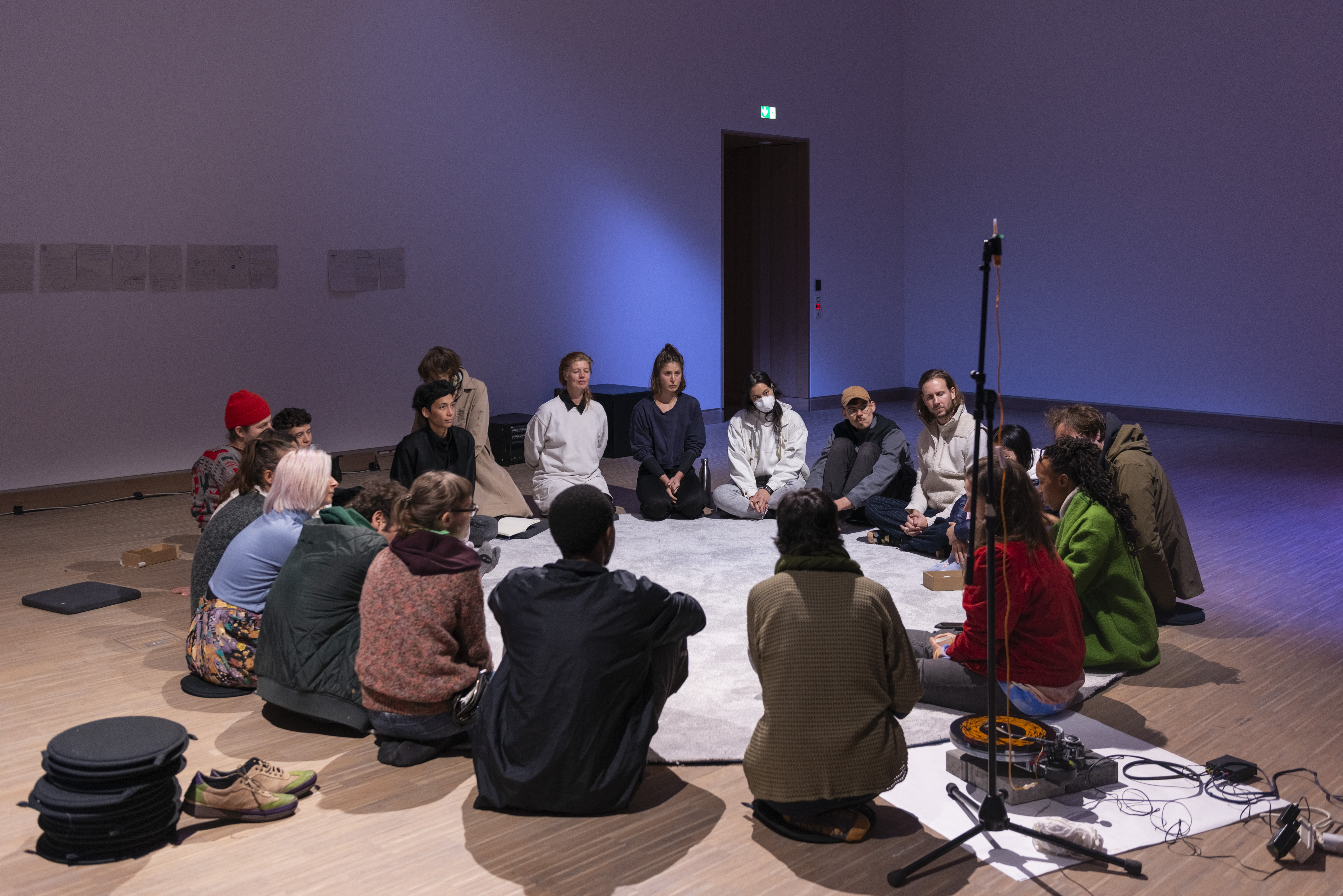
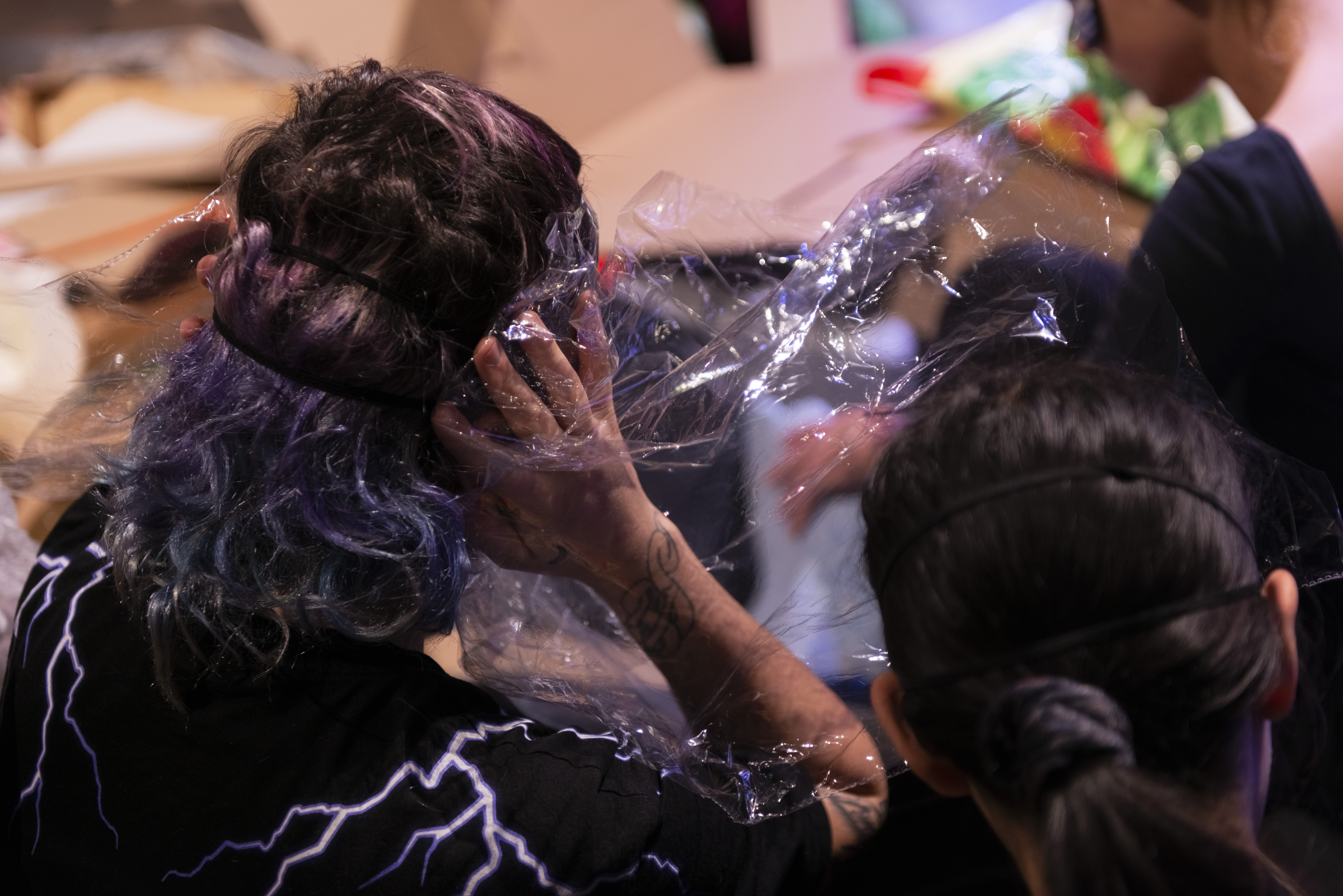
Performatorium & Charlotta Ruth
This workshop session questioned who or what carries, develops, and transmits knowledge in performance and socially engaged art.
Rather than a well-organised storage, we imagine the archive as a vibrant memory field. How can we better include intersubjective and embodied knowledge inside archival practice?
Led by Performatorium (Olivia Jaques/Marlies Surtmann) and Charlotta Ruth, PhD participants engaged in "mapping" performative practices. The session understood the process of collecting and exchanging knowledge not just as documentation, but as a moment of creating networks and contributing to a critical feminist art historiography of performance art.
Research Stammtisch & Dinner
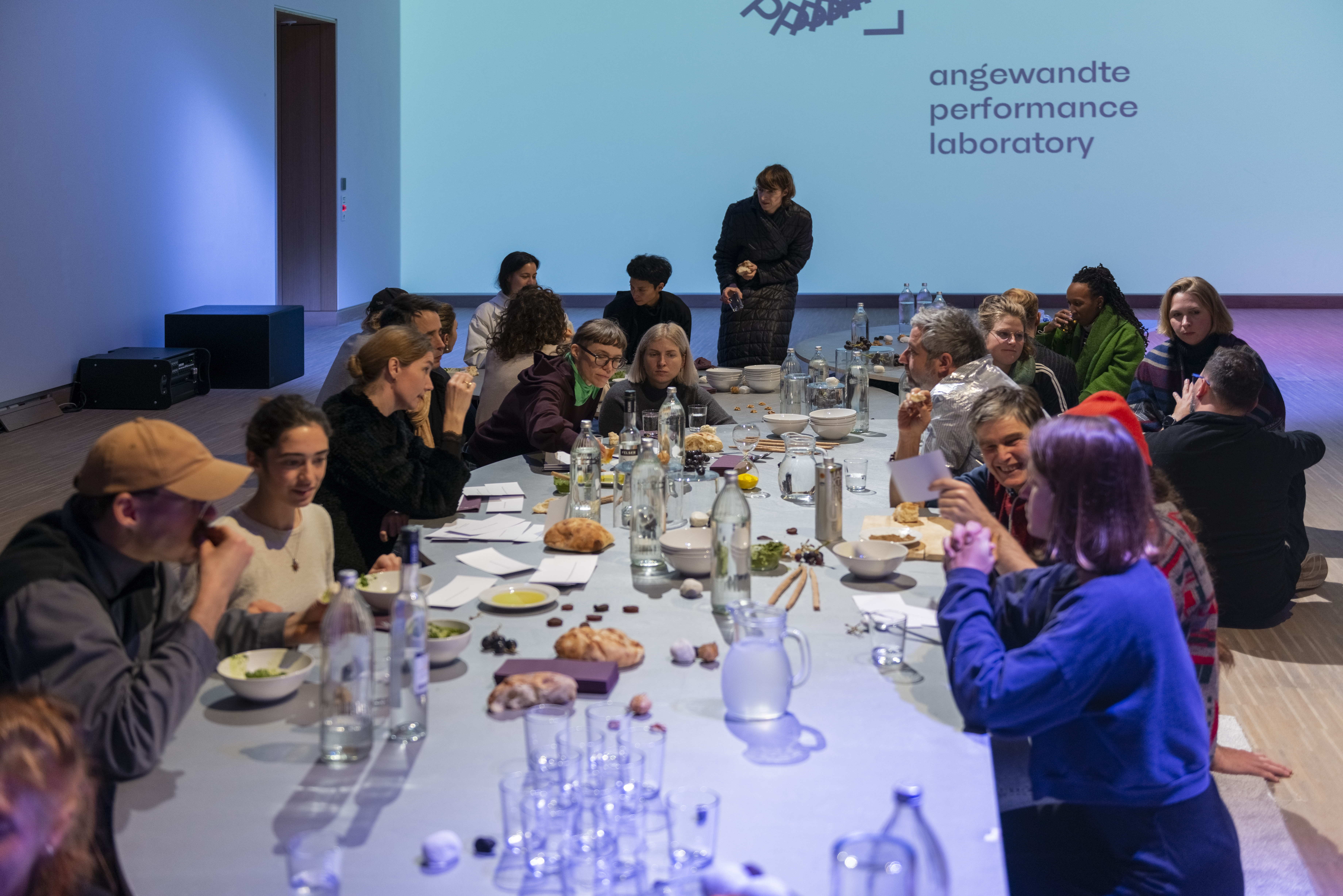
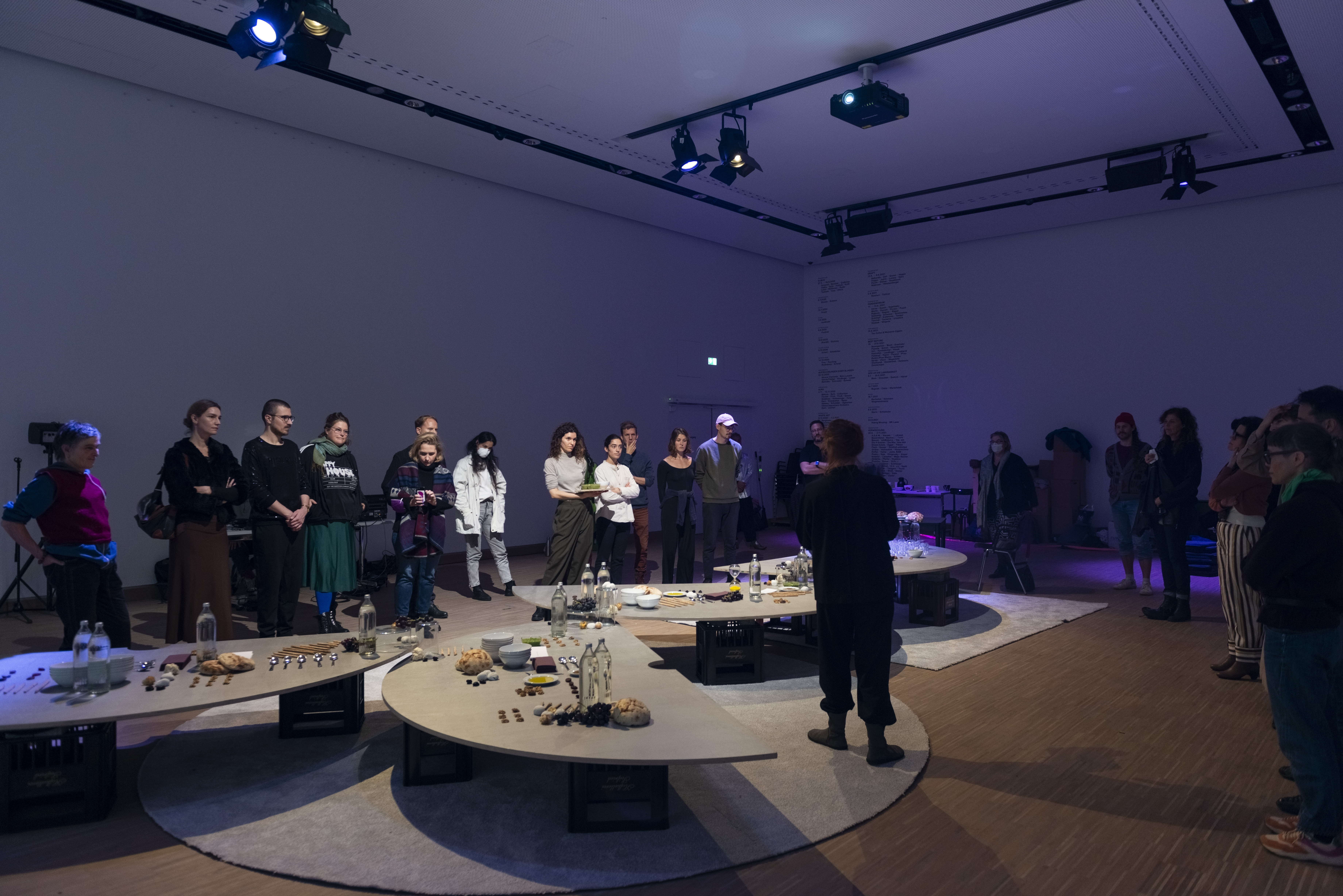
Radical Intimacy with Research Questions
The "Research Stammtisch" served as an experimental format to rethink the signifying codexes of table culture. Not a structured meeting, but a loose encounter for exchanging experiences with a focus on praxis. It provided a space for radical intimacy with research questions, shared interests, and the precarities of the artistic research field. Accompanied by a "Research Dinner" designed to explore a range of different tastes—of foods and otherwise.
Microperformativity and Reflection
The symposium concluded with formats extending beyond traditional performance. This included fantasmical anatomie Anne Juren as well as the "Breeding Exercise" by Charlotta Ruth and Cordula Daus (a new institutional anatomy for performance) and a Guided Exhibition Tour of "Holobiont. Life is Other" with Lucie Strecker, focusing on microperformativity—the modes of action of the smallest biological and technical units applied in aesthetic processes.
More Info you can find here.
© Suchart Wannaset / APL