Maps of Entanglement
National Taiwan University of Arts (NTUA)
Taipei, 2026
Guest lecture on embodied mapping
In collaboration with the College of Performing Arts at NTUA, Timothy Nouzak facilitated a series of research guest lectures. The project explored how embodied practices—such as collective listening and sensing—can reveal new understandings of time, space, and digital composition.
The research aimed to rethink the relationship to the body in two distinct contexts: first, by exploring how somatic practices translate into digital video technology and visual composition; and second, by using "concept mapping" to visualize the invisible structures of collective improvisation.
National Taiwan University of Arts (NTUA)
Taipei, 2026
Guest lecture on embodied mapping
In collaboration with the College of Performing Arts at NTUA, Timothy Nouzak facilitated a series of research guest lectures. The project explored how embodied practices—such as collective listening and sensing—can reveal new understandings of time, space, and digital composition.
The research aimed to rethink the relationship to the body in two distinct contexts: first, by exploring how somatic practices translate into digital video technology and visual composition; and second, by using "concept mapping" to visualize the invisible structures of collective improvisation.

Event: Guest Lecture & Workshop
Focus: Embodied Mapping & Composition
In collaboration with: NTUA Graduate School of Contemporary Visual Culture and Practice & NTUA College of Performing Arts
Concept: Timothy Nouzak
Photo/Documentation: NTUA
Supported by: Mobilty Grant, European Education and Culture Executive Agency (EACEA)
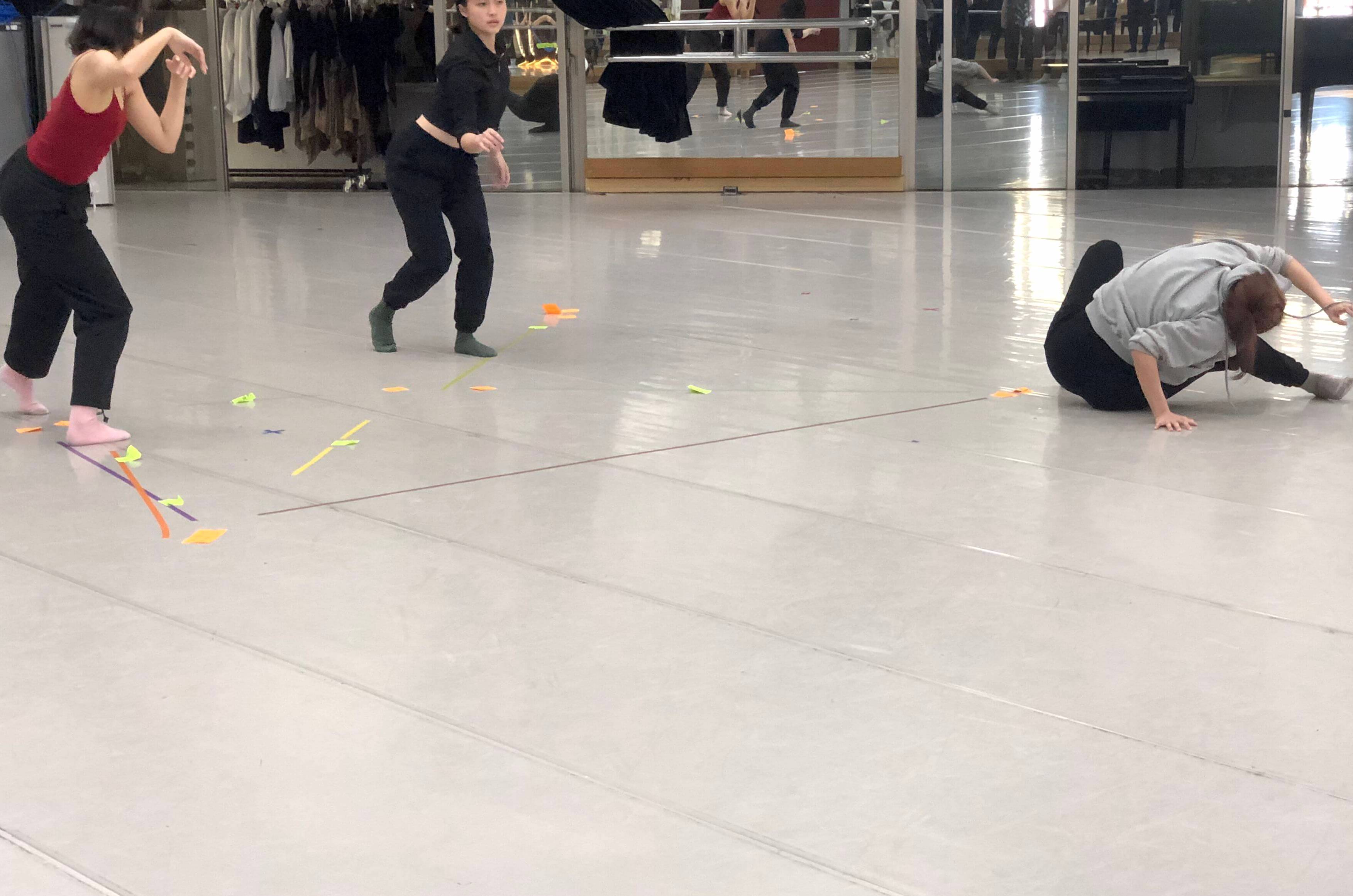


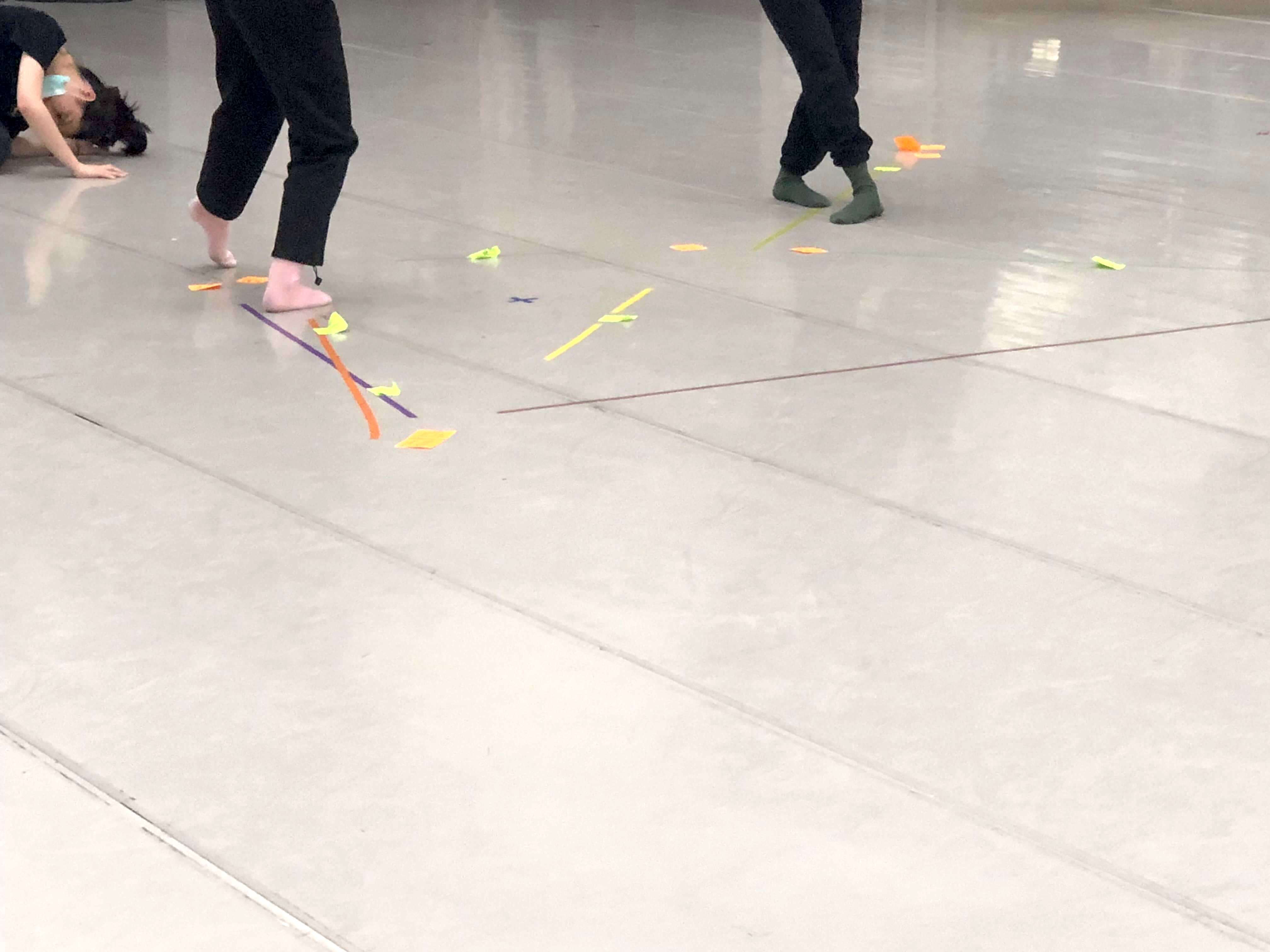
Maps of entanglement
I. Introduction
The facilitator introduces the concept of maps of entanglement, explaining is contents and how it can be useful. They also provide further gerneral context of how maps as a choreographic tool can be used in various creation contexts and how they relate to interpersonal communication beyond the performing arts context.
II. Improvisation.
Participants engage in a short guided movement score practice that reflects on various organizational articulations how a group can be organized in space and how individuals' movements relate to each other.
III. Lingering context
The facilitator guides participants in reflecting on the structural principles observed in the improvisation and how they have helped to organize and frame the space.
IV. Entanglement mapping practice:
Participants work in smaller groups to notate their thoughts on post-it notes, which are then incorporated into a larger collective map.
V. Group discussion:
Based on the shared map, each group draws further connections between two concepts using tape. The groups then discuss, if possible further reorganizations are needed.
VI. Entangled concepts:
Each smaller group labels and names one connection between the two concepts with an intuitive, affective concept
VII. Performing the entanglement:
Each group connects with another concept and formulates a brief choreographic articulation that relates to both concepts as a guiding structural principle. Don’t forget to consider how it relates to the other presences in the space and the audience.
© special thanks to


© photo by NTUA